
Zucchini fritters are one of those dishes that invite endless improvisation. I love how a pinch of cumin, a handful of fresh herbs, or a dash of hot sauce can totally change the vibe of these crispy bites. There’s something honest about turning a humble vegetable into something golden and satisfying, especially when you’re in a rush or just craving comfort food with a crunch.
Over the years, I’ve made these fritters for everything—lazy weeknights, unexpected guests, or just because I had a bunch of zucchini and needed to get rid of it without the usual salad route. They’re forgiving, flexible, and you really can’t mess them up—just keep an eye on the pan. It’s a dish that feels creative but still straightforward, making it perfect for improvisation and personal touches.
Focusing on how zucchini fritters can be a forgiving, adaptable dish that varies with seasonings and toppings, making it perfect for improvisation and personal taste. Emphasizing the satisfaction of turning humble garden produce into something crispy, golden, and utterly customizable, even on busy weeknights.
Turning humble zucchini into crispy bites
- Making these fritters always feels like a small victory, especially when I get that perfect crispy edge.
- I remember the first time I added a dash of smoked paprika—completely changed the flavor profile, in a good way.
- There’s something satisfying about turning a pile of grated zucchini into golden, crunchy bites that disappear fast.
- I love how these fritters remind me of lazy summer afternoons in the garden, with fresh herbs and the smell of frying in the air.
- Even on my busiest days, these are a quick, forgiving comfort food that always makes me feel a bit more grounded.
The inspiration behind this dish
- This recipe started from a tiny garden patch where zucchini grew like weeds, and I needed a way to use them all without ending up with endless salads. One summer afternoon, I threw some grated zucchini into a pan with eggs and flour, and as I flipped that first fritter, I knew I had stumbled on something worth perfecting. It’s funny how a simple, humble vegetable can turn into something crispy and golden, especially when you’re in a rush and craving comfort.
- Making these fritters reminds me of lazy weekends at my grandma’s house, where she’d toss zucchini with herbs and fry them up in a cast iron skillet. They’re imperfect but forgiving—if they’re a little uneven or not quite crispy enough, it doesn’t matter. It’s all about that satisfying crunch and the warm, slightly smoky aroma that fills the kitchen when they’re ready.
- heading
- story_type
Historical and Cultural Roots
- Zucchini fritters have roots in Mediterranean and Middle Eastern cuisines, where vegetable-based fried snacks are common.
- Historically, fritters were a way to preserve seasonal vegetables, turning them into a crispy, handheld treat.
- In some regions, zucchini fritters are called ‘zucchini pancakes’ or ‘courgette latkes,’ reflecting local variations.
- The simplicity of this dish made it a staple in peasant kitchens, using whatever vegetables and herbs were on hand.
- Modern twists often include herbs like dill or mint, adding a fresh, aromatic layer that wasn’t traditional but now feels essential.
Key ingredients and tips
- Zucchini: Grate it fine and drain well—excess moisture is the enemy of crispness, and a wet fritter is a soggy disappointment. Feel free to swap for yellow squash if you want a milder flavor and a softer bite.
- Eggs: They hold everything together and give the fritters body. If you’re vegan, a flaxseed or chia seed mixture works, but expect a slightly denser, less fluffy result.
- Flour: I use all-purpose flour for a light crust, but almond flour can be an option for a nuttier flavor and gluten-free needs—just watch the moisture balance.
- Herbs: Fresh dill or parsley brighten up the fritters and add a touch of freshness. Dried herbs work in a pinch, but they won’t give you that vibrant, herbal punch.
- Oil: A neutral oil like vegetable or canola for frying, which crackles and turns golden quickly. For a smokier note, try a touch of sesame oil in the frying stage—just don’t overdo it.
- Seasonings: Salt, pepper, and a pinch of garlic powder bring out the zucchini’s natural sweetness. Feel free to sprinkle in some cumin or hot paprika for a spicy twist.
- Optional additions: Grated cheese or chopped scallions can add richness and texture, but keep in mind they might influence crispness—add just before frying to prevent sogginess.
Spotlight on key ingredients
Zucchini:
- Grate it fine and drain well—excess moisture is the enemy of crispness, and a wet fritter is a soggy disappointment. Feel free to swap for yellow squash if you want a milder flavor and a softer bite.
- Eggs: They hold everything together and give the fritters body. If you’re vegan, a flaxseed or chia seed mixture works, but expect a slightly denser, less fluffy result.
- Flour: I use all-purpose flour for a light crust, but almond flour can be an option for a nuttier flavor and gluten-free needs—just watch the moisture balance.
Herbs:
- Fresh dill or parsley brighten up the fritters and add a touch of freshness. Dried herbs work in a pinch, but they won’t give you that vibrant, herbal punch.
- ingredient
Notes for ingredient swaps
- Zucchini: Swap for yellow squash if you want a milder, softer bite, but expect slightly less moisture release.
- Eggs: Use a flaxseed or chia seed mixture (1 tbsp flax/chia + 3 tbsp water) for a vegan version, though they won’t be as fluffy.
- Flour: Almond flour works as a gluten-free alternative, adding nuttiness but may make the fritters a bit denser.
- Herbs: Fresh dill or parsley are ideal, but dried herbs can substitute in a pinch—just use half as much for vibrant flavor.
- Oil: Neutral oils like vegetable or canola give a crisp crackle; sesame oil adds smoky notes but use sparingly to avoid overpowering.
- Seasonings: Feel free to add cumin, paprika, or hot sauce—these bring warmth and spice, customized to your taste.
- Add-ins: Grated cheese or scallions add richness—add just before frying to prevent sogginess and keep crispness.
Equipment & Tools
- Box grater: To grate zucchini finely for even cooking and crispy edges.
- Mixing bowl: To combine grated zucchini, eggs, flour, and herbs.
- Frying pan: For frying the fritters evenly with enough oil to crisp the edges.
- Spatula: To flip and handle the fritters gently.
- Paper towels: To drain excess oil after frying.
Step-by-step guide to zucchini fritters
- Gather your equipment: a box grater, a mixing bowl, a frying pan (around 25cm or 10 inches), a spatula, and paper towels for draining. Have a plate ready for the cooked fritters.
- Wash and trim the zucchini. Grate it finely directly into a large bowl. Sprinkle with a pinch of salt and toss to draw out excess moisture. Let sit for 10 minutes.
- While zucchini releases water, prepare your flaxseed or chia seed mixture if vegan: mix 1 tbsp flax/chia with 3 tbsp water, let sit until gel-like, about 5 minutes.
- Drain the grated zucchini: squeeze out as much moisture as you can using your hands or a clean cloth. The drier, the crispier your fritters will be.
- Add 1 beaten egg (or vegan substitute) and about 1/4 cup all-purpose flour to the zucchini. Mix well until combined. Stir in chopped herbs, garlic powder, salt, and pepper.
- Heat a generous splash of oil in your pan over medium heat (~160°C / 320°F). When shimmering, spoon in about 2 tbsp of batter per fritter, pressing down gently to flatten.
- Cook for 3–4 minutes until the edges turn golden and crispy. Flip carefully and cook another 2–3 minutes. The fritters should be crispy and golden on both sides.
- Check for doneness: the fritters should be firm and crispy, with a crackling surface and a fragrant, savory aroma. If they’re soggy, increase heat slightly or cook longer.
- Remove the fritters and drain on paper towels briefly. Let rest for 1–2 minutes to firm up before serving. Serve hot with your preferred toppings or dips.
Let the cooked fritters rest on paper towels for a minute. Serve immediately while hot and crispy, topped with a dollop of sour cream, a squeeze of lemon, or your favorite herbs. They’re best enjoyed fresh but can be kept warm in a low oven for a few minutes if needed.
How to Know It’s Done
- Fritters are golden and crispy on the edges.
- They hold together when flipped and moved in the pan.
- A quick press shows minimal moisture oozing out.
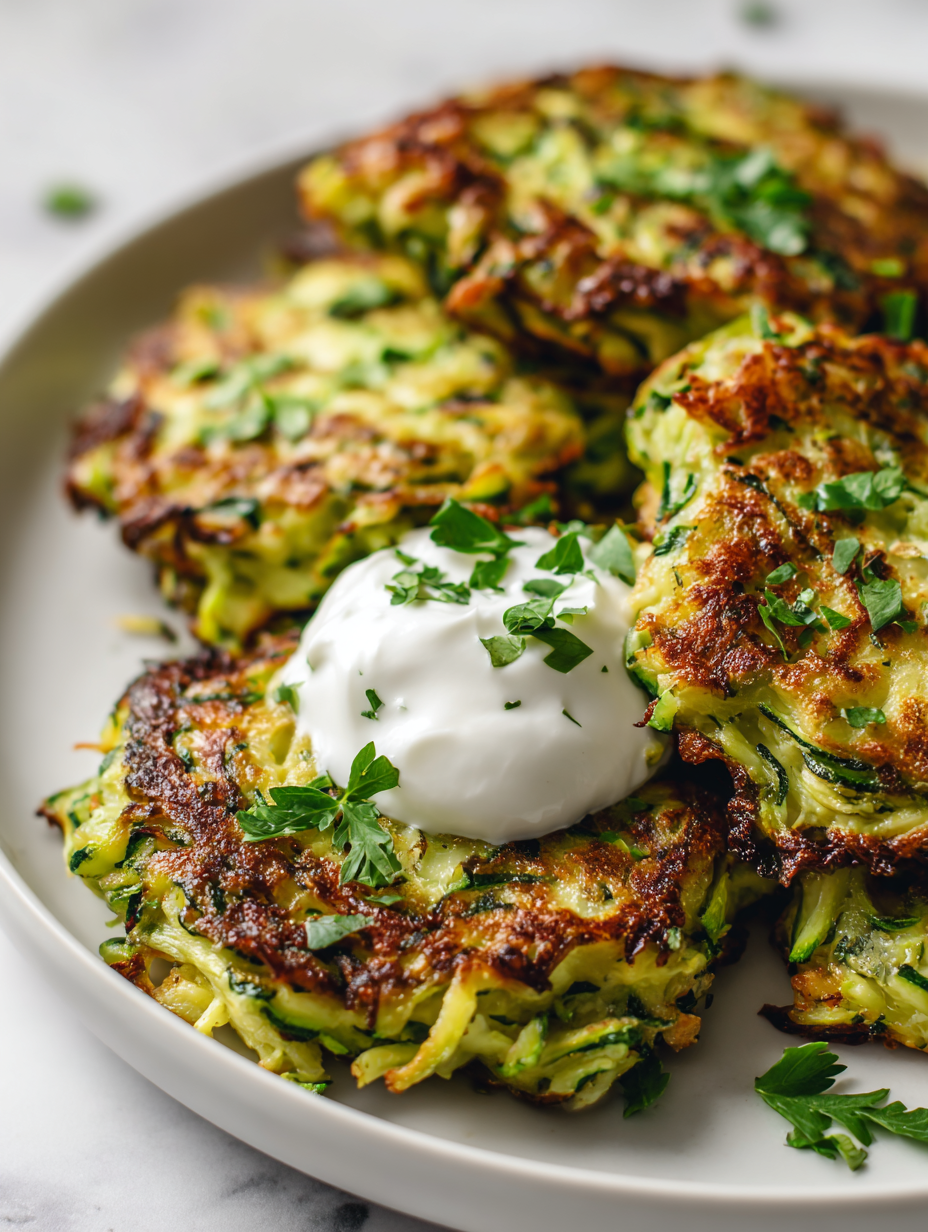
Zucchini Fritters
Ingredients
Equipment
Method
- Wash and trim the zucchini, then grate them finely directly into a large mixing bowl. Sprinkle with a pinch of salt and toss to draw out excess water. Let sit for about 10 minutes while the zucchini releases moisture.
- Using your hands or a clean cloth, squeeze out as much moisture as possible from the grated zucchini. This step helps keep the fritters crispy and prevents sogginess.
- Add the beaten egg and flour to the drained zucchini. Mix thoroughly until the mixture is cohesive but still slightly sticky.
- Stir in the chopped herbs, then season with salt and black pepper to taste. The mixture should look moist but hold together when pressed.
- Heat a tablespoon of oil in a frying pan over medium heat until shimmering and hot, but not smoking. You should hear a gentle sizzle when the batter hits the pan.
- Spoon about 2 tablespoons of batter per fritter into the pan, pressing gently with the back of your spatula to flatten slightly. Leave space between each to allow for flipping.
- Cook for 3–4 minutes on one side until the edges turn deep golden and crispy. You’ll hear a gentle crackle and see bubbles forming around the edges.
- Carefully flip each fritter and cook for another 2–3 minutes until golden and crispy on both sides. Adjust the heat if they start to burn.
- Transfer the cooked fritters to a paper towel-lined plate to drain any excess oil. Let them rest for a minute to firm up.
- Serve the fritters immediately while still hot and crispy, garnished with extra herbs or a squeeze of lemon if desired. Enjoy their satisfying crunch and tender interior!
Pro tips for perfect fritters
- Use a fine grater to get even, crispy edges on your zucchini fritters.
- Squeeze out as much moisture as possible from the zucchini to prevent sogginess.
- Keep the oil at a steady medium heat (~160°C/320°F) for even frying and golden color.
- Flip the fritters when the edges turn deep golden and they release easily from the pan.
- Rest the cooked fritters for a minute to help them firm up before serving.
- Add a pinch of salt to the grated zucchini early to help draw out moisture efficiently.
- For extra crispiness, press the batter gently with the back of your spatula during frying.
Common mistakes and how to fix them
- FORGOT to drain zucchini thoroughly → Squeeze out excess moisture to prevent sogginess.
- DUMPED in too much oil → Use just enough to coat the pan for crisp edges, not deep frying.
- OVER-TORCHED the fritters → Cook over medium heat and flip once golden to avoid burning.
- MISSED the resting step → Let cooked fritters rest briefly to firm up and prevent crumbling.
Quick fixes and pantry swaps
- When fritters are soggy, splash a little more oil and cook longer until crisp.
- If batter sticks to the pan, patch with a quick sprinkle of oil and flip carefully.
- Dumped too much zucchini moisture? Rescue with a quick squeeze and a dash of extra flour.
- Over-torched edges? Shield with a lower heat and flip sooner next time.
- When lacking fresh herbs, pantry swap with dried; use half as much for flavor balance.
Prep, store, and reheat tips
- Grated zucchini can be prepared a day in advance; store in an airtight container in the fridge. It may release some moisture, so drain again before mixing.
- Fritters are best served fresh, but can be refrigerated for up to 24 hours. Reheat in a hot skillet until crispy and warmed through, about 2–3 minutes per side.
- For longer storage, freeze cooked fritters on a baking sheet, then transfer to a zip-top bag. Reheat in a 180°C (350°F) oven until crisp, about 5–7 minutes.
- Refrigerated fritters may lose some crispness; reheating in a hot pan helps restore crunch and aroma. Expect a softer texture if stored overnight.
- Avoid storing with moist toppings or sauces, which can make the fritters soggy. Add fresh toppings just before serving for best texture.
Top questions about zucchini fritters
1. How do I prevent soggy fritters?
Squeeze out as much moisture as possible from the zucchini after grating; it helps keep the fritters crispy and not soggy.
2. What’s the best way to get crispy edges?
Use a non-stick or well-seasoned skillet and keep the oil medium-hot to get a golden, crispy crust.
3. How do I drain zucchini properly?
Drain the grated zucchini thoroughly, then squeeze out excess water using a clean cloth or your hands.
4. How do I avoid burning the fritters?
Adjust the heat if the fritters are browning too quickly or not enough—medium heat (~160°C/320°F) is usually best.
5. Can I customize the seasonings?
Feel free to add herbs like dill or parsley for extra flavor, or spices such as cumin or paprika for a twist.
6. Can I prepare zucchini ahead of time?
Refrigerate grated zucchini in an airtight container for up to 24 hours; re-drain before mixing with other ingredients.
7. How do I know when the fritters are done?
Cook the fritters until golden and crispy on both sides, usually about 3–4 minutes per side, then rest briefly before serving.
8. What if my batter is too runny or dry?
If the batter feels too wet, add a little more flour; if too dry, a splash of water or milk can help.
9. Can I make these vegan?
For vegan versions, use flaxseed or chia seed gel instead of eggs, but expect slightly firmer fritters.
10. How should I store and reheat leftovers?
Store leftovers in the fridge for up to a day, then reheat in a hot pan to regain crunch and aroma.
These zucchini fritters are a reminder that humble ingredients can shine with a little care and attention. The aroma of crispy edges and the warm, herbal notes make them an easy, satisfying meal that feels just right for any season. Putting these together always sparks a bit of pride, especially when served fresh from the pan, still bubbling and crackling.
Honestly, I keep coming back to this recipe because it’s forgiving and adaptable—perfect for improvising with what I have. Whether topped with a dollop of sour cream or a squeeze of lemon, they never fail to bring a little joy and a lot of crunch to the table.

Welcome to Exploreing New Tastes. I’m really glad you found your way here. I’m a food blogger driven by curiosity more than perfection. I think about flavors constantly, how they change across cultures, how a small tweak can completely shift a dish, and how food tells stories long before anyone sits down to eat. This blog is where I document that curiosity, one recipe and one experience at a time.