
Vegetable spring rolls might seem simple, but there’s an art to balancing freshness with just a hint of warmth. I love how a quick toss of herbs can elevate crunchy veggies—making each bite a lively contrast of textures and flavors. It’s a way to celebrate raw produce without losing that satisfying, lightly cooked note.
This recipe grew out of my need for a snack that’s vibrant, quick, and forgiving. I’ve found that a gentle sauté of herbs—like basil and mint—adds depth without overpowering the crispness of the raw veggies. It’s a reminder that sometimes, less is more, especially when you want a dish that feels fresh and satisfying all at once.
Focusing on the art of balancing vibrant raw vegetables with just enough warmth from lightly sautéed herbs, this recipe highlights how a quick, gentle cook can elevate the freshness without losing crunch or brightness, making each bite a textural and flavor contrast that delights the senses.
The delicate balance of fresh and warm
- I first made these when I needed a quick, fresh snack after a long day, and the crunch of raw veggies with that warm herb kick just stuck with me.
- There’s a chaos to prepping all the colorful vegetables, but once rolled, it feels like a little celebration of summer in every bite.
- Watching friends’ faces light up when they taste that perfect balance of crisp and tender—it’s honestly pretty satisfying.
- I love how these spring rolls remind me of childhood visits to my favorite Vietnamese markets—bright, bustling, and full of life.
- Sometimes I add a splash of spicy hoisin or a squeeze of lime at the end—small tweaks that make each bite feel special.
The inspiration behind this dish
Making these vegetable spring rolls always takes me back to my first trip to a bustling Asian market. Watching vendors expertly roll fresh herbs and crunchy vegetables into rice paper felt like witnessing a tiny act of art. Since then, I’ve been obsessed with balancing the raw freshness with just a touch of warmth from sautéed herbs—something I stumbled into by accident, but now can’t do without. It’s the kind of dish that feels both spontaneous and thoughtful, perfect for those days when I want something light but full of flavor.
Contextual origin, trivia, or history
- Vegetable spring rolls have roots in Southeast Asian cuisine, particularly Vietnam, where they’re known as ‘gỏi cuốn’.
- Historically, these rolls were a way to use fresh, leftover vegetables and herbs, making them a practical street food.
- The rice paper wrapping originated in China, but its adaptation in Vietnam made it a symbol of fresh, healthy eating.
- In recent years, these rolls gained global popularity as a light, customizable appetizer or snack, especially in health-conscious circles.
- The art of rolling and filling varies regionally, reflecting local ingredients and family traditions, turning each batch into a small cultural story.
Key ingredients and tips
- Rice paper: I love how it turns silky and supple when soaked, but be careful not to over-soak—your rolls will tear. A quick dip in warm water, about 10 seconds, is enough.
- Carrots: Crunchy and sweet, I prefer julienned carrots for even texture. If yours are thick, shave them thinner for better rolling and mouthfeel.
- Cucumbers: Juicy and crisp, I use English cucumbers for fewer seeds and less water logging. Remove seeds if they’re overly watery or your rolls will be soggy.
- Herbs: Fresh basil and mint are essentials—they add a fragrant, bright pop. Gently bruise the leaves before rolling to release their oils and flavor.
- Vermicelli noodles: Soft and chewy, I cook them just until tender—about 3 minutes in boiling water—then rinse in cold water to stop cooking and keep them from sticking.
- Vegetables (bell peppers, lettuce): For color and crunch, thinly slice bell peppers and use sturdy lettuce leaves. They add texture and a vibrant visual contrast.
- Dipping sauce: I keep it simple—soy, lime, a splash of fish sauce, and a pinch of chili. The bright, salty tang makes everything pop, especially with the fresh veggies.
Spotlight on key ingredients
Rice paper:
- I love how it turns silky and supple when soaked, but be careful not to over-soak—your rolls will tear. A quick dip in warm water, about 10 seconds, is enough.
- Carrots: Crunchy and sweet, I prefer julienned carrots for even texture. If yours are thick, shave them thinner for better rolling and mouthfeel.
- Cucumbers: Juicy and crisp, I use English cucumbers for fewer seeds and less water logging. Remove seeds if they’re overly watery or your rolls will be soggy.
Herbs and noodles:
- Herbs: Fresh basil and mint are essentials—they add a fragrant, bright pop. Gently bruise the leaves before rolling to release their oils and flavor.
- Vermicelli noodles: Soft and chewy, I cook them just until tender—about 3 minutes in boiling water—then rinse in cold water to stop cooking and keep them from sticking.
Notes for ingredient swaps
- Dairy-Free: Use tahini or almond butter in your dipping sauce for a nutty, creamy flavor without dairy.
- Gluten-Free: Rice paper is naturally gluten-free, but ensure your soy sauce or hoisin sauce is gluten-free if needed.
- Vegetarian: Skip fish sauce or use a vegetarian alternative like mushroom soy for a umami boost without animal products.
- Herb Variations: Swap basil and mint for cilantro and Thai basil for a different aromatic punch.
- Crunchy Veggies: Try jicama or daikon radish instead of carrots for a milder, crisp texture.
- Noodle Options: Use kelp noodles or zucchini noodles if you want a lighter, lower-carb version.
- Freshness Boost: Add thinly sliced green apple or pear for a sweet, tart contrast that still maintains freshness.
Equipment & Tools
- Large shallow dish: For soaking rice paper without tearing.
- Sharp knife: Julienning vegetables precisely.
- Small bowl of warm water: Soaking rice paper easily.
- Clean work surface: Assembly area for rolling.
Step-by-step guide to vegetable spring rolls
- Equipment & Tools: Gather a large shallow dish for soaking rice paper, a sharp knife for julienning, a small bowl of warm water (about 40°C / 104°F), and a clean work surface.
- Prepare the vegetables: Julienne carrots, thinly slice cucumbers, and finely chop herbs. Keep each in separate bowls for easy access.
- Cook the noodles: Boil water, add vermicelli, cook for 3 minutes, then rinse with cold water. Drain well and set aside.
- Soak rice paper: Dip one sheet at a time into warm water for about 10 seconds until just pliable. Do not over-soak or it’ll tear.
- Lay out the rice paper: Place the softened sheet on your work surface. Keep the rest covered with a damp towel to prevent drying.
- Fill the rolls: Place a small handful of noodles near the bottom center, add a few strips of each vegetable, and some herbs. Don’t overfill.
- Roll tightly: Fold the sides inward, then roll from bottom to top, keeping it snug but gentle to avoid tearing. Repeat for each roll.
- Finish and serve: Rest the completed rolls on a plate lined with lettuce leaves. Serve immediately with your favorite dipping sauce.
- Check for doneness: The rice paper should be translucent, vegetables crunchy yet tender, and rolls sealed without cracks.
- Fix common issues: If rolls tear—soak a bit longer; if too loose—roll tighter; if soggy—serve sooner or add less water to soak.
Place completed rolls on a plate lined with lettuce or herbs. Serve immediately, or cover with a damp cloth if not eating right away to prevent drying.
How to Know It’s Done
- Rice paper is translucent and flexible without tearing.
- Vegetables maintain crunch and bright color.
- Rolls are tightly sealed with no cracks or leaks.
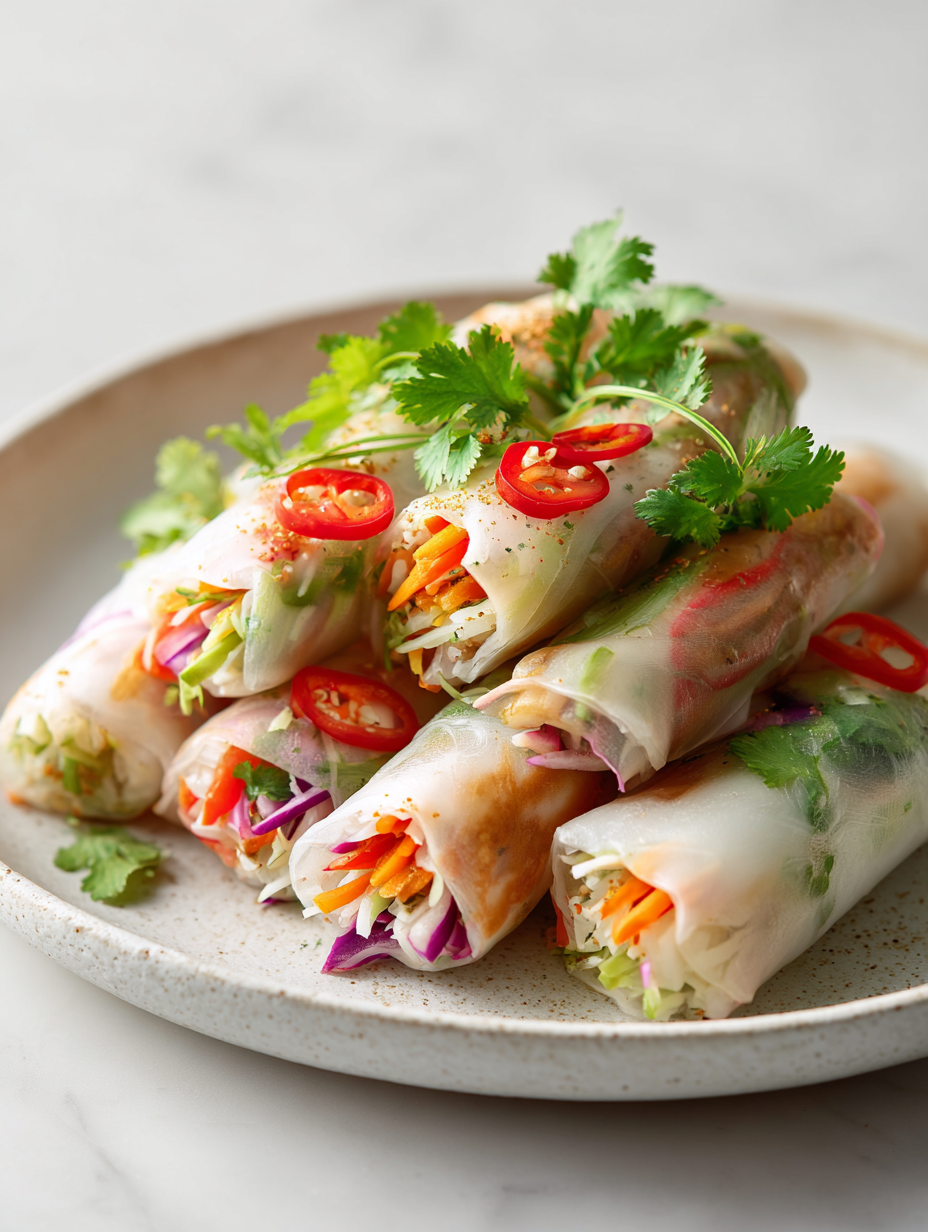
Vegetable Spring Rolls with Herb Warmth
Ingredients
Equipment
Method
- Gather all your ingredients: julienned carrots, sliced cucumbers, herbs, cooked noodles, sliced peppers, and lettuce leaves. Set your small bowl of warm water nearby for soaking rice paper.
- Gently dip one sheet of rice paper into the warm water for about 10 seconds until it becomes soft and pliable. Carefully lift it out, letting excess water drip off, and lay it flat on your work surface.
- Place a small handful of cooked noodles near the bottom center of the rice paper. Add a few strips of carrots, cucumbers, and bell peppers on top of the noodles. Tuck in some herbs for fragrance and flavor.
- Gently fold the sides of the rice paper inward, then roll from the bottom up, keeping the filling snug but not overstuffed. Use your fingers to press gently and seal the roll.
- Repeat the soaking, filling, and rolling process with the remaining rice paper sheets and ingredients, keeping finished rolls on a plate lined with lettuce to prevent sticking.
- In a small pan, lightly sauté a handful of basil and mint just until fragrant and slightly warmed—about 30 seconds. This enhances their aroma without wilting the leaves.
- Prepare your dipping sauce by mixing soy sauce, lime juice, fish sauce (if using), and chopped chili in a small bowl. Adjust to taste for a bright, savory accompaniment.
- Serve the finished spring rolls immediately, with the warm herbs on the side or tucked inside for extra flavor. Dip into your savory sauce and enjoy the crunchy, fresh flavors with a fragrant herb kick.
Pro tips for perfect spring rolls
- Boldly dip: Soak rice paper just 10 seconds in warm water—too long and it tears easily.
- Crunch check: Julienne carrots thin enough for easy rolling and perfect bite-sized crunch.
- Herb bruise: Gently bruise herbs before rolling to release their fragrant oils and flavor.
- Tight rolls: Keep fillings snug but not overstuffed to avoid cracks or tears during rolling.
- Seal with care: Fold sides inward and roll firmly to ensure the spring rolls stay sealed and intact.
- Freshness test: The rice paper should be translucent and flexible, not sticky or brittle.
- Serve promptly: These are best enjoyed immediately for maximum crunch and freshness.
Common mistakes and how to fix them
- TOO MUCH SOAKING: Rice paper tears. Fix with a shorter dip, about 5-8 seconds.
- OVERFILLING: Rolls burst open. Use less filling and keep it snug but not tight.
- TEARING ROLLS: Handle gently, don’t press too hard when rolling to prevent ripping.
- SOGGY ROLLS: Serve immediately or keep covered with a damp cloth to maintain freshness.
Quick fixes and pantry swaps
- If rice paper tears, splash it with warm water and soak a few seconds longer.
- When rolls are too loose, patch with a dab of water and re-roll gently.
- Dumped too much filling? Remove excess and tighten the roll for a cleaner look.
- Over-torched herbs? Shield with a damp towel and refresh with fresh herbs for flavor.
- When rolls are soggy, serve immediately or keep covered; a quick re-dip can revive texture.
Prep, store, and reheat tips
- Prep all vegetables and herbs in advance; store in airtight containers in the fridge for up to 2 days. The freshness of crunch and aroma stays lively.
- Cooked noodles can be made a day ahead; keep refrigerated in a sealed container, and rinse in cold water before using to prevent sticking.
- Assemble rolls up to 4 hours before serving; keep covered with a damp cloth or plastic wrap to prevent drying out and preserve the crunch.
- Refrigerate leftovers in an airtight container for up to 24 hours; the rice paper may soften slightly, but the flavors remain fresh. Reheat briefly in a warm, dry pan if desired—just enough to warm, not soggy.
Top questions about vegetable spring rolls
1. How long should I soak the rice paper?
Soak rice paper just until flexible, about 10 seconds, to prevent tearing. Too long and it becomes sticky and fragile.
2. How thin should the vegetables be sliced?
Julienne carrots very thin—think matchsticks—to make rolling easier and maintain crunch in each bite.
3. Can I use regular cucumbers?
Use English cucumbers for fewer seeds and less water, which keeps the rolls from getting soggy. Remove seeds if watery.
4. Can I skip herbs or substitute them?
Fresh basil and mint are best. Gently bruise the leaves before rolling to release aroma and flavor, boosting the freshness.
5. How do I prepare the noodles?
Cook vermicelli noodles in boiling water for 3 minutes, then rinse in cold water to stop cooking and keep them chewy.
6. My rolls keep tearing—what do I do?
If rolls tear when rolling, dip rice paper a bit longer or handle more gently. Keep fillings snug but not overstuffed.
7. How long can I store prepared rolls?
Serve immediately for the best crunch. If needed, cover with a damp cloth to keep from drying out, but texture softens over time.
8. What tools do I need?
Use a shallow dish for soaking rice paper, a sharp knife for vegetables, and a damp towel to keep everything ready.
9. What if my rolls are soggy or tearing?
Fix soggy rolls by serving them right away or re-rolling with a damp cloth. For tearing, keep soaking briefly and handle delicately.
10. Can I make a vegan dipping sauce?
For a vegan dip, try mixing soy sauce, lime juice, and a touch of chili. It’s bright, tangy, and works with raw veggies.
These vegetable spring rolls might seem straightforward, but they hold a quiet magic in balancing textures and bright flavors. Each bite offers a little burst of freshness that feels both familiar and new, especially when dipped in that spicy-sour sauce. They’re perfect for that moment when you want something light but still crave a satisfying crunch.
In a world rushing towards convenience and processed foods, making these at home reconnects me with simple, honest ingredients. Plus, they remind me that the best dishes often come from a bit of patience and care. No matter the occasion, they’re a reminder to slow down and appreciate the small, vibrant moments in cooking.

Welcome to Exploreing New Tastes. I’m really glad you found your way here. I’m a food blogger driven by curiosity more than perfection. I think about flavors constantly, how they change across cultures, how a small tweak can completely shift a dish, and how food tells stories long before anyone sits down to eat. This blog is where I document that curiosity, one recipe and one experience at a time.