
Vegetable fritters are my go-to for turning odds and ends into something crispy and satisfying. They’re forgiving, flexible, and come together with whatever veg you’ve got sitting around. I love how the batter can hide less-than-perfect produce, transforming it into golden bites that are actually fun to eat.
There’s a quiet joy in mixing up a batch on a lazy weekend afternoon, especially when the fridge is looking a little sparse. It’s like a little culinary act of rebellion—no need for fancy ingredients, just good, honest vegetables and a simple batter. Plus, they smell so good while cooking, all toasty and savory, that you forget about any kitchen chaos.
This recipe focuses on how vegetable fritters can be a forgiving canvas for whatever odds and ends you’ve got lingering in the fridge, turning everyday odds and ends into something crispy, golden, and satisfying.
Transforming odds into crispy bites
- These fritters remind me of lazy Sunday mornings, where the smell of crispy vegetables fills the house, bringing a quiet sense of home.
- I love how this recipe turns just a few odds and ends into something worth savoring, especially when the fridge feels a little empty.
- There’s a small thrill in flipping the fritters and hearing that satisfying sizzle, a reminder that simple ingredients can be magic.
- Nothing beats the feeling of crispy edges giving way to tender, flavorful bites—like a little celebration in every mouthful.
The story behind this recipe
- This recipe started as a way to use up the mountain of zucchini and carrots from my garden, but it quickly became more than that. It’s about that moment when you realize how forgiving and adaptable vegetable fritters can be—whatever odds and ends you have, they turn into crispy, golden bites that make everything feel a little more special.
- I remember the first time I threw in some leftover spinach and a handful of chopped herbs just to see what would happen. The aroma of sizzling vegetables, mingling with a hint of garlic and toasty oil, made me smile. Now, it’s my comfort food, a reminder that simple ingredients can create something truly satisfying, no matter how chaotic the fridge looks.
- story_type
Fritters’ Surprising Cultural Roots
- Vegetable fritters have roots in many ancient cuisines, from the Middle East to Asia, often as a way to use leftover vegetables.
- The concept of frying mixed vegetables in batter likely emerged as a practical street food in bustling markets, where quick, satisfying bites were essential.
- In Eastern Europe, similar fritters called ‘latkes’ or ‘draniki’ have long traditions, especially around harvest festivals and family gatherings.
Ingredient breakdown: key components
- Carrots: I love how their natural sweetness caramelizes, adding a subtle depth. If they’re too soggy, squeeze out excess moisture before mixing.
- Zucchini: It’s my go-to for moistness, but it can be watery. Salt and drain well to avoid soggy fritters—think crispy edges, not limp.
- Flour: I use all-purpose for structure, but a touch of almond flour adds nuttiness. If you need gluten-free, rice flour works but alters the texture slightly.
- Eggs: They bind everything together with a tender crumb. For a vegan version, try flaxseed meal—watch for a slightly denser bite.
- Garlic & Herbs: I crush fresh garlic and toss in chopped parsley or dill for brightness. Smell that toasty aroma when they’re just right, not burnt.
- Oil: I prefer neutral oil like canola or sunflower for frying—hot enough to sizzle without smoking. A smoky pan can ruin the flavor, so keep an eye on the heat.
- Seasoning: Salt and pepper are basics, but a pinch of smoked paprika or cumin can add a smoky warmth. Taste the batter before frying to adjust.
Spotlight on key ingredients
Carrots and Zucchini:
- Carrots: I love how their natural sweetness caramelizes, adding a subtle depth. If they’re too soggy, squeeze out excess moisture before mixing.
- Zucchini: It’s my go-to for moistness, but it can be watery. Salt and drain well to avoid soggy fritters—think crispy edges, not limp.
Notes for ingredient swaps
- Dairy-Free: Use plant-based milk or skip altogether. It won’t bind as tightly but still works.
- Gluten-Free: Swap all-purpose flour for rice or chickpea flour. Expect a slightly denser texture.
- Egg-Free: Replace eggs with flaxseed meal mixed with water. The fritters will be a bit softer but still tasty.
- Vegetable Variations: Swap zucchini for shredded sweet potato or squash for different sweetness and color.
- Herb Boost: Use basil or cilantro instead of parsley for a fresh, aromatic twist.
- Oil Choice: Try sesame or coconut oil for a distinct flavor. Keep in mind smoke points vary.
- Spice It Up: Add a pinch of cayenne or smoked paprika for a smoky kick or heat.
Equipment & Tools
- Large mixing bowl: To combine and mix ingredients thoroughly.
- Frying pan (about 25cm diameter): To cook the fritters evenly with sufficient surface area.
- Spatula: To flip and handle the fritters gently.
- Paper towels: To drain excess oil for crispiness.
- Grater: To shred vegetables finely.
Step-by-step guide to vegetable fritters
- Gather all your ingredients and tools. A large mixing bowl, a frying pan (about 25cm diameter), a spatula, and a paper towel for draining are essential.
- Prepare vegetables: Grate 1 cup each of zucchini and carrots. Salt them lightly and let sit for 10 minutes to draw out excess moisture, then squeeze out liquid firmly.
- In a large bowl, whisk 2 eggs until frothy. Add 1 cup all-purpose flour, a pinch of salt, pepper, and spices if using. Mix well to combine.
- Stir in the grated vegetables, chopped herbs, and minced garlic. The batter should be thick but scoopable. Adjust with a little more flour if too wet.
- Heat about 2-3 tablespoons of oil in the pan over medium heat (about 180°C/350°F). Test with a small drop of batter; it should crackle immediately.
- Scoop about 2 tablespoons of batter for each fritter. Gently flatten with the back of the spatula. Cook in batches, not overcrowding the pan.
- Cook for 3-4 minutes until edges are golden brown and crispy. Flip carefully and cook another 2-3 minutes. The fritters should be evenly browned and crispy on both sides.
- Check the fritters: they should feel firm and have a deep, golden color. The aroma should be savory and toasty. If soggy, cook a little longer or turn the heat up slightly.
- Remove from pan and let drain on paper towels. Rest for 2 minutes to firm up before serving.
Let the fritters rest for a couple of minutes on a wire rack or paper towels. Serve hot, with a squeeze of lemon or a dollop of yogurt if you like. They’re best eaten fresh but can be refrigerated for up to a day and reheated in a hot pan for crispness.
How to Know It’s Done
- Edges are deep golden and crispy.
- Fritters feel firm and hold together when lifted.
- Aromatic smell of toasted garlic and herbs is noticeable.
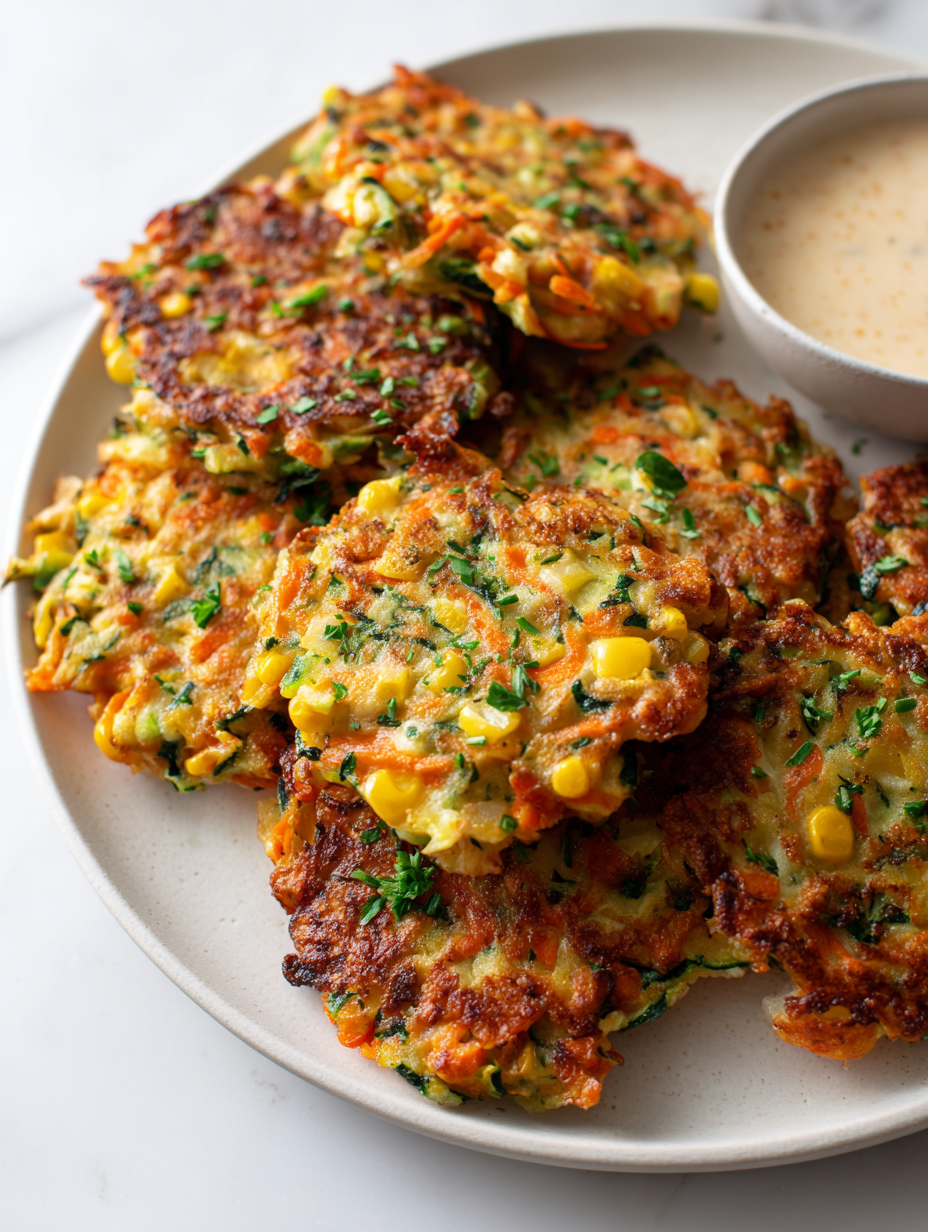
Vegetable Fritters
Ingredients
Equipment
Method
- Start by grating zucchini and carrots using a fine grater. Place the grated vegetables in a bowl, sprinkle lightly with salt, and let sit for 10 minutes to draw out excess moisture. Then, squeeze out as much liquid as possible using your hands or a clean towel.
- In a large mixing bowl, whisk the eggs until frothy and slightly bubbly. Add the flour, minced garlic, chopped herbs, and a pinch of salt and pepper. Mix until well combined, forming a thick batter.
- Stir the grated vegetables into the batter, folding gently until evenly coated. The mixture should be thick and scoopable; if it's too wet, add a little more flour.
- Heat about 2 tablespoons of neutral oil in a frying pan over medium heat until shimmering and hot—test by dropping a small spoonful of batter, which should sizzle immediately.
- Scoop about 2 tablespoons of the batter into the hot pan and gently flatten into a round patty using the back of your spatula. Repeat to fill the pan, but do not overcrowd.
- Cook the fritters for 3-4 minutes until the edges are golden brown and crispy, and the bottoms release easily from the pan. Carefully flip each fritter and cook for another 2-3 minutes until evenly browned and crispy all over.
- Remove the cooked fritters and drain on paper towels to absorb excess oil. Continue frying the remaining batter in batches, maintaining the oil temperature.
- Let the fritters rest for a couple of minutes to firm up. Serve warm, garnished with extra herbs or a squeeze of lemon for added brightness.
Pro tips for perfect vegetable fritters
- Keep the batter thick enough to hold the vegetables together, but not so stiff that it’s hard to scoop.
- Ensure oil is hot enough before adding the fritters; a crackling sound means it’s ready, around 180°C/350°F.
- Flatten each fritter gently in the pan to promote even cooking and crispy edges.
- Don’t overcrowd the pan; cook in batches to keep the temperature steady and fritters crispy.
- Use a spatula to gently lift and flip the fritters; wait until edges are golden before turning.
- Drain cooked fritters on paper towels immediately to remove excess oil and keep them crispy.
- Rest the fritters for 2 minutes after cooking to firm up the structure before serving.
Common mistakes and how to fix them
- FORGOT to squeeze excess moisture from vegetables → Drain thoroughly to avoid soggy fritters.
- DUMPED ingredients into the bowl without mixing → Mix until just combined for even texture.
- OVER-TORCHED the fritters → Keep an eye on heat; turn down if edges darken too quickly.
- USED cold oil for frying → Use hot oil (about 180°C/350°F) to ensure crisp edges.
Quick fixes and pantry swaps
- When fritters are too oily → Splash with hot water to absorb excess, then pat dry quickly.
- If batter is too thick → Open pantry swap: add a splash of sparkling water for lightness.
- DUMPED ingredients without mixing → Mix thoroughly to prevent uneven cooking and texture.
- Overcooked or burnt edges → Shield with a lid or lower heat to finish cooking without burning.
- Soggy fritters after frying → Rescue by placing on a wire rack, then reheat in a hot pan for crispiness.
Prep, store, and reheat tips
- Prepare the grated vegetables and squeeze out excess moisture ahead of time; store in an airtight container in the fridge for up to 24 hours. They’ll stay fresh and firm, maintaining their crunch.
- Mix the batter partially—just combine the eggs, flour, and seasonings—and keep it covered in the fridge for up to 12 hours. The flavors meld and batter thickens slightly overnight.
- Cook the fritters in batches, then let them cool completely on a wire rack. Once cooled, store in an airtight container in the fridge for 1-2 days. They’ll soften slightly but still hold some crispness.
- Reheat in a hot skillet over medium-high heat (around 180°C/350°F). Cook for 2-3 minutes per side until crispy and heated through. Expect a fragrant, toasty aroma and a satisfying crunch. Do not microwave, or they’ll turn soggy.
Top questions about vegetable fritters
1. How should I prepare the vegetables?
Use a fine grater to get even, tender bits. It helps the fritters hold together better.
2. How do I prevent soggy fritters?
Drain excess moisture from zucchini and carrots after salting. It prevents sogginess and keeps fritters crispy.
3. What’s the right oil temperature?
Keep the oil around 180°C/350°F. It’s hot enough for crispness but not so hot that it burns quickly.
4. How many fritters at a time?
Cook in small batches. Too many at once cools the pan and makes fritters greasy and unevenly cooked.
5. How do I know when to flip?
Flip carefully once edges are golden and crispy, about 3-4 minutes per side. They should sound crackly when ready.
6. How do I keep fritters crispy?
Drain on paper towels immediately after frying. It helps remove excess oil and keeps them crispy.
7. How do I reheat leftover fritters?
Reheat in a hot skillet for 2-3 minutes per side. They regain their crunch and aroma easily this way.
8. Can I make these vegan?
Vegan? Try flaxseed meal mixed with water as a binder. It’s a good substitute but slightly softer.
9. What’s a good gluten-free flour substitute?
For a gluten-free version, use rice or chickpea flour. Expect a denser, slightly nuttier bite.
10. Can I customize the herbs?
Add herbs like dill or cilantro for a fresh twist. Use sparingly to keep the flavor bright and balanced.
These vegetable fritters are a reminder that simple, imperfect ingredients can come together into something unexpectedly delicious. The crispy edges and tender insides make every bite satisfying, especially when served hot from the pan. They’re a humble, versatile dish that fits into any season or moment.
Honestly, I find myself craving them after a long day when I want comfort without fuss. The smell of garlic and herbs, the crackle of frying, it’s all part of the quiet joy of cooking something honest and real. Sometimes, that’s all I need.

Welcome to Exploreing New Tastes. I’m really glad you found your way here. I’m a food blogger driven by curiosity more than perfection. I think about flavors constantly, how they change across cultures, how a small tweak can completely shift a dish, and how food tells stories long before anyone sits down to eat. This blog is where I document that curiosity, one recipe and one experience at a time.