
Roasting edamame might seem straightforward, but when you turn up the heat, something magical happens. The beans develop a deep, smoky aroma that’s addictive, almost like toasted nuts but with that bright, vegetal pop. It’s a simple snack that’s unexpectedly sophisticated, perfect for when you want something crunchy and full of flavor without much fuss.
I stumbled on this trick during a busy week when I was craving something satisfying but didn’t want to reach for chips or distracted by complicated recipes. The roasting process transforms the humble edamame into a snack that’s both nostalgic and something new. It’s a reminder that sometimes, the simplest ingredients benefit most from a little heat and patience.
This recipe is all about uncovering the hidden depths in everyday foods. The smoky, slightly charred flavor makes the edamame more than just a quick snack — it’s a small, intentional moment of flavor that surprises your senses. Plus, it’s versatile enough to sprinkle over salads, serve alongside drinks, or just keep munching straight from the bowl.
Focusing on the unexpectedly smoky depth that roasting brings out in edamame, transforming a simple snack into a complex, crave-worthy treat.
The story behind this recipe
- I first tried roasting edamame on a whim, looking for a way to make a snack that felt both easy and a little special. The moment they hit the hot oven, I was hit with a smoky, almost nutty aroma that caught me off guard. It was like discovering a secret hidden inside this humble bean. Now, I keep a jar of these roasted edamame on hand—crunchy, flavorful, and surprisingly addictive.
- One lazy Saturday, I tossed some edamame with a splash of sesame oil and a sprinkle of sea salt, then roasted them until golden and fragrant. The kitchen filled with a warm, toasted scent that made everyone come running. That day, I learned that simple ingredients, when given a little heat, can turn into something memorable. It’s become my go-to for when I want a snack that feels both comforting and a little unexpected.
- story_type
Ingredient breakdown: key components
- Edamame: Fresh, bright green beans with a firm bite—when roasted, they turn smoky and nutty, almost like toasted almonds. Use frozen for convenience, but thaw and dry thoroughly first.
- Olive oil: Just a light coating helps the beans crisp up beautifully and enhances flavor—don’t drown them, or they’ll steam instead of roast. Stick to a good extra virgin for that fruity aroma.
- Sea salt: Essential for that salty punch that balances the roasted flavor—add more after roasting if you’re a salt fiend, or skip for a lighter snack. Flaky sea salt gives a satisfying crunch.
- Smoked paprika: Adds a subtle smoky depth that amplifies the roasting process—if you don’t have it, a dash of chipotle powder works, but skip if you want a milder flavor.
- Garlic powder: Provides a savory undertone that doesn’t overpower—use fresh garlic only if you’re roasting in a larger batch, as it can burn easily and turn bitter. Keep it light.
- Lemon zest: Brightens the whole thing with a zing—add right after roasting for a fresh burst, especially if you’re serving these as a snack or topping salads. Avoid too much zest to keep it subtle.
Spotlight on key ingredients
Edamame:
- Bright green, plump beans that turn smoky and nutty when roasted—look for firm, freshly frozen ones for best flavor.
- Olive oil: Adds a golden sheen and helps crisp the beans—use good quality for a fruity aroma, but don’t drown them in oil.
Spices & Zest:
- Smoked paprika: Brings a subtle smoky depth that amplifies the roasting process—use sparingly to avoid overpowering the beans.
- Lemon zest: Brightens the flavor with a zing—add right after roasting for a fresh, aromatic burst that complements the smoky notes.
Notes for ingredient swaps
- Dairy-Free: Skip butter or cream—use olive oil or coconut oil for a similar richness without dairy. The flavor shifts to a cleaner, slightly fruity note.
- Salt Variations: Use sea salt for a flaky crunch or kosher salt for a milder saltiness. Both help enhance the nutty flavor—avoid table salt if possible.
- Spice Boost: Swap smoked paprika for chipotle powder or cayenne for more heat. These add smoky or fiery depth, depending on your preference.
- Oil Choices: Replace olive oil with avocado oil or toasted sesame oil. The latter adds a nutty aroma that complements the edamame’s earthiness.
- Herb Additions: Mix in dried herbs like thyme or oregano before roasting for an herbal twist. Keep in mind, they can burn easily—add near the end if needed.
- Acid Brightening: Instead of lemon zest, try a splash of rice vinegar or a drizzle of balsamic for a tangy contrast that’s less bright but still lively.
Equipment & Tools
- Oven: To roast the edamame evenly at high heat.
- Baking sheet: Provides a flat surface for roasting and spreading the beans.
- Mixing bowl: To toss the edamame with oil and seasonings.
- Parchment paper: For easy cleanup and preventing sticking.
- Spatula: To stir and turn the edamame during roasting.
Step-by-step roasting guide
- Preheat your oven to 200°C (400°F). Gather a rimmed baking sheet, a mixing bowl, and a spatula. Line the sheet with parchment for easy cleanup.
- If using frozen edamame, thaw them completely and pat dry with a towel. They need to be dry so they roast evenly and get crispy.
- In the mixing bowl, toss the edamame with a tablespoon of olive oil, making sure each bean is lightly coated. Add a pinch of sea salt and a sprinkle of smoked paprika if using.
- Spread the edamame in an even layer on the prepared baking sheet. Don’t overcrowd; give each bean space to roast properly.
- Bake for 15-20 minutes. Halfway through, stir or shake the pan to ensure even roasting. Keep an eye on them after 15 minutes—look for a golden, slightly charred edge.
- When the beans are deeply fragrant with a smoky aroma and have a crisp, crackly exterior, they’re ready. Check for a nutty scent and firm texture.
- Remove from oven, sprinkle with lemon zest or more sea salt if desired. Let them sit for 5 minutes to cool and crisp up further.
- Serve warm or at room temperature. They’re best eaten fresh but can be stored in an airtight container for 2-3 days.
- If they soften after a day, re-crisp in a hot oven for 5 minutes at 180°C (350°F).
Let the roasted edamame sit for 5 minutes to cool slightly and develop a crunch. Transfer to a bowl, sprinkle with lemon zest or extra salt if desired, and serve immediately for maximum crispness.
How to Know It’s Done
- Color: deep golden with some charred edges.
- Aromatic: smoky, toasted bean smell filling the kitchen.
- Texture: crunchy outside with a firm bite inside.
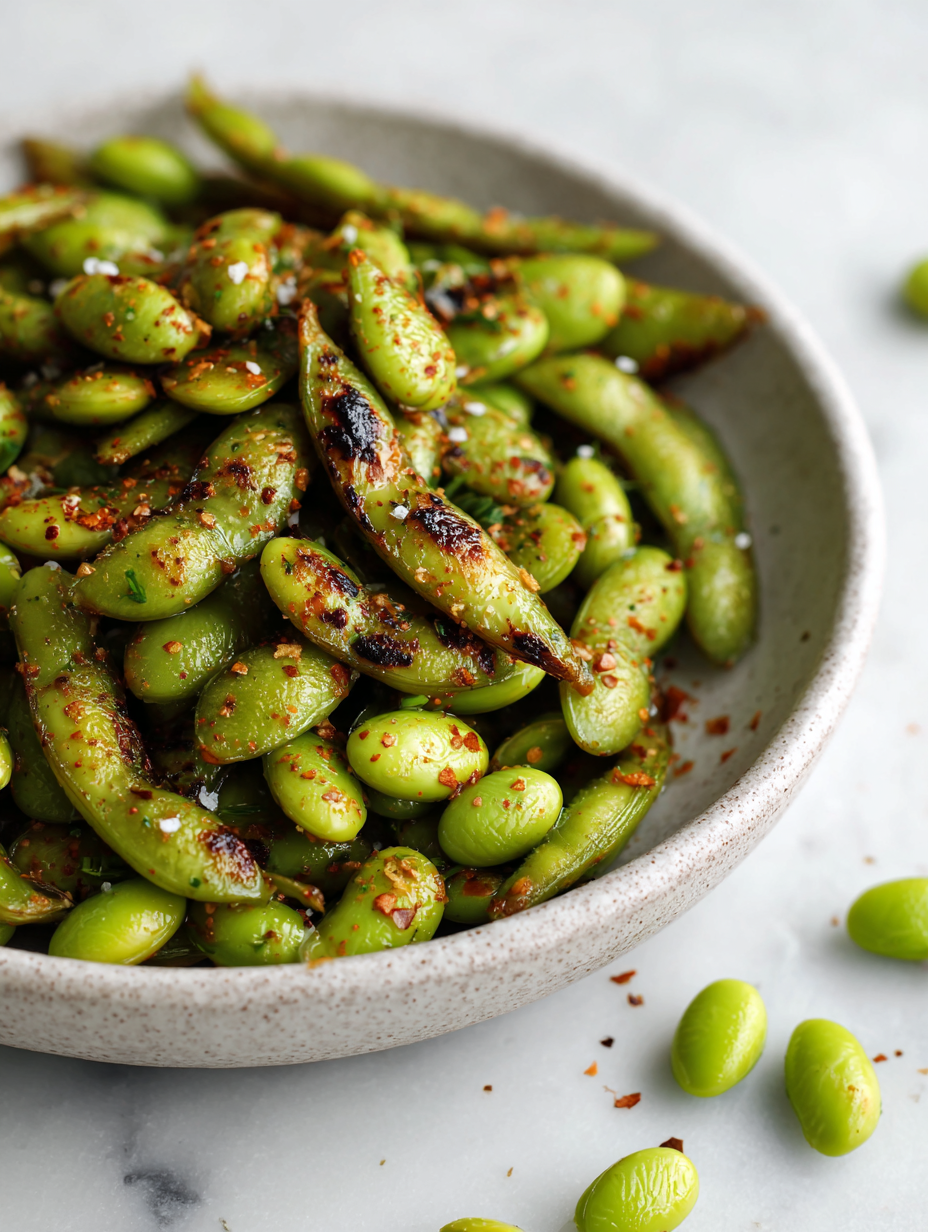
Smoky Roasted Edamame
Ingredients
Equipment
Method
- Preheat your oven to 200°C (400°F). Line a baking sheet with parchment paper for easy cleanup.
- Thaw the frozen edamame completely and pat them dry with a clean towel to remove excess moisture, ensuring they crisp up during roasting.
- In a mixing bowl, toss the dried edamame with a tablespoon of olive oil, making sure each bean gets a light coat. Sprinkle over the sea salt, smoked paprika, and garlic powder, then toss again to evenly distribute the seasonings.
- Spread the seasoned edamame in a single, even layer on the prepared baking sheet, giving each bean space to roast properly.
- Bake in the preheated oven for 15 to 20 minutes, stirring or shaking the pan halfway through. The edamame should turn a deep golden brown and develop some charred edges, filling your kitchen with a toasted aroma.
- Once roasted, remove the baking sheet from the oven and immediately sprinkle the lemon zest over the hot edamame to add a bright, fresh contrast to the smoky flavor.
- Let the edamame sit for 5 minutes to cool and crisp up further. The exterior should be crackly and fragrant, with a firm bite inside.
- Transfer the roasted edamame to a serving bowl and enjoy immediately as a crunchy snack or topping for salads and bowls.
Pro Tips for Perfect Roasted Edamame
- Bolded mini-head: Use a high smoking point oil like avocado for maximum crispness and flavor.
- Bolded mini-head: Shake the pan halfway through roasting to promote even browning and prevent sticking.
- Bolded mini-head: Keep an eye on the beans after 15 minutes—edges should be golden with some char for that smoky depth.
- Bolded mini-head: Pat dry frozen edamame thoroughly; excess moisture will steam, not roast, and ruin crunch.
- Bolded mini-head: Add lemon zest immediately after roasting to preserve its bright, zesty aroma and flavor.
- Bolded mini-head: For extra crunch, roast in a single layer and avoid overcrowding the pan—air needs to circulate freely.
- Bolded mini-head: If beans soften after a day, re-crisp in a 180°C (350°F) oven for 5 minutes—crackly and fragrant again.
Common mistakes and how to fix them
- TOO MUCH OIL: Drenching the edamame prevents crisping. Use just a tablespoon for even roasting.
- OVERROASTED: Burning the beans results in a bitter flavor. Keep an eye after 15 minutes, stir regularly.
- UNDERROASTED: Pale beans lack smoky depth. Roast until deeply golden and fragrant, with some charred edges.
- SKIPPING DRYING: Wet or frozen edamame steams instead of roasts. Pat dry thoroughly for proper crunch.
Quick fixes and pantry swaps
- When smoky aroma shimmers, splash a squeeze of lemon for brightness.
- If beans are soggy, patch with a quick re-roast at 180°C (350°F) for 5 minutes.
- DUMPED too much oil? Shake off excess before roasting for crispier beans.
- Over-torched edges? Shield with foil mid-roast to prevent bitter char.
- When in doubt, pantry swap: swap smoked paprika for chipotle powder for an extra smoky punch.
Prep, store, and reheat tips
- Prepare the edamame: Thaw frozen edamame completely and pat dry to ensure they crisp up during roasting.
- Store roasted edamame in an airtight container: Keep for up to 3 days in the fridge, where they stay crunchy and fragrant.
- Reheat with care: Warm in a 180°C (350°F) oven for 5 minutes to restore crispness, watching for a golden, crackly exterior.
- Flavor can intensify or slightly dull over time: For the best smoky aroma and crunch, enjoy within a day or two of roasting.
- Avoid freezing roasted edamame: Freezing can make them soggy, so consume shortly after cooling completely.
Top questions about roasted edamame
1. How do I choose the best edamame for roasting?
Look for bright green, firm edamame, preferably frozen for freshness. They develop a smoky, nutty aroma when roasted.
2. Should I use oil or dry the edamame before roasting?
Use a light coating of olive or sesame oil to help them crisp without steaming. Too much oil makes them soggy.
3. What’s the ideal oven temperature and time for roasting edamame?
Bake at 200°C (400°F) for 15-20 minutes, stirring halfway. They’re done when deeply golden and fragrant.
4. When should I add flavorings like lemon or salt?
Add lemon zest immediately after roasting for a fresh zing. For extra flavor, sprinkle with sea salt or smoked paprika.
5. How long can I keep roasted edamame and how do I reheat?
Store roasted edamame in an airtight container for up to 3 days in the fridge. Reheat in a hot oven for crispness.
6. How can I ensure even roasting without sogginess?
Avoid overloading the pan; give each bean space for even crisping. Overcrowding leads to steaming instead of roasting.
7. How can I fix soggy roasted edamame?
If they become soft after a day, re-crisp in a 180°C (350°F) oven for 5 minutes. They’ll crackle again.
8. What tools are best for roasting edamame?
Use parchment paper to prevent sticking and make cleanup easier. A rimmed baking sheet helps contain everything.
9. What should I do if the edamame over-browns?
Burnt edges taste bitter—check after 15 minutes and stir. Shield with foil if they brown too quickly.
10. Can I customize the spice level or smoky flavor?
For a smoky flavor, try swapping smoked paprika with chipotle powder. Adjust amount for desired heat.
This roasted edamame recipe feels like a quiet victory—something simple, yet deeply satisfying with its smoky crunch. It’s a reminder that good things happen when you trust a little heat and patience in the kitchen. The aroma alone makes the house feel warmer, more inviting, even if just for a moment.
In a world full of complicated snacks, these beans offer a straightforward, honest pleasure. They’re perfect for casual gatherings or a quick solo treat. Sometimes, it’s the simplest bites that leave the biggest impression.

Welcome to Exploreing New Tastes. I’m really glad you found your way here. I’m a food blogger driven by curiosity more than perfection. I think about flavors constantly, how they change across cultures, how a small tweak can completely shift a dish, and how food tells stories long before anyone sits down to eat. This blog is where I document that curiosity, one recipe and one experience at a time.