
These mixed vegetable fritters are my go-to whenever I have a stray assortment of veggies that need using up. There’s something about the way they come together—crisp on the outside, tender inside—that makes even the simplest fridge raid feel like a small triumph. They’re not just a snack; they’re a way to repurpose leftovers into something satisfying and fresh.
I love how forgiving this recipe is—any mix of greens, roots, or even bits of cooked vegetables can be folded into the batter. It’s a spontaneous, no-fuss approach to cooking that brings a little brightness to a hectic day. Plus, the smell of sizzling batter with hints of garlic and onion makes the whole kitchen feel like a weekend treat, even on a busy weeknight.
Focusing on the idea that these fritters are not just a quick snack, but a versatile, spontaneous way to repurpose leftover vegetables and turn everyday greens into a crispy, satisfying treat that can brighten any meal or mood.
Turning leftovers into crispy bites
- These fritters remind me of childhood afternoons, where simple veggies could turn into something special with just a touch of heat.
- I feel a little proud every time I rescue limp carrots and wilted greens, transforming them into crispy bites that disappear fast.
- There’s a quiet joy in mixing up whatever’s left in the fridge—these fritters make leftovers feel like a treat.
Turning leftovers into crispy bites
- This recipe came about one rainy afternoon when I was rummaging through my fridge, trying to find something quick and nourishing. I realized that leftover veggies, which normally would sit forlorn in the crisper, could be transformed into something crispy and satisfying with just a little batter and heat. That moment of improvisation turned into this humble fritter recipe that’s now a staple in my kitchen.
- What I love most is how it’s a bit of a kitchen rescue—turning limp greens, forgotten carrots, and bits of cooked veg into golden, crackly bites. It’s imperfect, spontaneous, and honest. Every batch feels like a small victory—simple ingredients, big flavor, no fuss.
- heading
- story_type
Historical and Cultural Tidbits
- These fritters have roots in street food stalls across South Asia, where they were a quick way to use seasonal vegetables.
- In many cultures, vegetable fritters are a traditional way to make humble, seasonal produce into something hearty and shareable.
- The idea of turning leftover vegetables into crispy snacks was probably born out of necessity, then evolved into a beloved comfort food worldwide.
Key ingredients and their quirks
- Zucchini: I always squeeze out excess moisture from grated zucchini; it keeps fritters crispy and prevents sogginess. Skip this step if your zucchini is firm and dry.
- Carrots: Grated carrots add sweetness and color—make sure they’re finely shredded for even cooking. If you prefer milder flavor, reduce the quantity.
- Onion: Finely chopped onion gives a savory punch and releases a lovely aroma when sautéed. For a milder taste, soak chopped onion in cold water for a few minutes before adding.
- Flour: I use all-purpose flour, but chickpea or rice flour works well for gluten-free versions. If batter feels too thick, stir in a splash of cold water.
- Eggs: They help hold everything together, but for vegan swaps, try mashed bananas or flaxseed mixture—just expect a slightly different texture and flavor.
- Spices & herbs: I like cumin and cilantro, but a pinch of curry powder or chopped basil can change the vibe entirely. Keep it simple or experiment based on your mood.
- Oil: Use a neutral oil like canola or sunflower for frying—watch for shimmering and crackling as a sign it’s hot enough. Too much oil, and fritters will be greasy, so keep it moderate.
Spotlight on key ingredients
Zucchini & Carrots:
- Zucchini: I always squeeze out excess moisture from grated zucchini; it keeps fritters crispy and prevents sogginess. Skip this step if your zucchini is firm and dry.
- Carrots: Grated carrots add sweetness and color—make sure they’re finely shredded for even cooking. If you prefer milder flavor, reduce the quantity.
Onion & Flour:
- Onion: Finely chopped onion gives a savory punch and releases a lovely aroma when sautéed. For a milder taste, soak chopped onion in cold water for a few minutes before adding.
- Flour: I use all-purpose flour, but chickpea or rice flour works well for gluten-free versions. If batter feels too thick, stir in a splash of cold water.
Notes for ingredient swaps
- Vegetables: Use frozen mixed vegetables—just thaw and drain well to avoid sogginess.
- Gluten-Free Flour: Swap in chickpea or rice flour for a hearty, nutty flavor and crisp texture.
- Eggs: For vegan fritters, replace with mashed banana or flaxseed meal mixed with water; expect a slightly denser bite.
- Oil: Try sesame or avocado oil for more flavor; keep an eye on smoke point and adjust heat accordingly.
- Herbs & Spices: Fresh herbs like parsley or basil can brighten the fritters; dried herbs work too but less pungent.
- Salt & Seasonings: Adjust salt if using soy sauce or salty seasonings to balance flavors without oversalting.
- Serving Accompaniments: A tangy yogurt or spicy chutney can elevate the experience, especially with milder veggies.
Equipment & Tools
- Large mixing bowl: To combine vegetables, flour, eggs, and spices.
- Grater or knife: To prepare vegetables into small, uniform pieces.
- Frying pan or skillet: To cook the fritters evenly and get a crispy crust.
- Slotted spoon: To lift and drain fritters from hot oil.
- Paper towels: To absorb excess oil after frying.
Step-by-step guide to fritters
- Gather your ingredients: leftover cooked vegetables, flour, eggs, spices, and oil. Have a mixing bowl and a frying pan ready.
- Chop or grate your vegetables into small, uniform pieces to ensure even cooking. Drain excess moisture if needed, especially for zucchini or watery veg.
- In a large bowl, combine the vegetables with flour, beaten eggs, and your chosen spices. Mix until you get a thick batter that holds together but isn’t too stiff.
- Heat a generous layer of neutral oil (about 1/4 inch) in a skillet over medium heat, around 180°C / 350°F. Oil should shimmer but not smoke.
- Use a spoon or small scoop to drop batter into the hot oil, gently pressing each fritter to flatten slightly. Cook in batches, leaving space between.
- Fry for about 3-4 minutes per side, until golden brown. Flip carefully; you’ll see a crackly, crispy crust forming. Adjust heat if browning too fast or slow.
- Check the fritters: they should be firm, crispy on the outside, and tender inside. If they’re soggy, turn down heat and cook longer. If burned, lower heat.
- Remove with a slotted spoon and drain on paper towels. Rest for 2-3 minutes to set the crust before serving.
- Finish with a sprinkle of fresh herbs or a squeeze of lemon if desired. Serve warm, ideally with a dipping sauce or yogurt.
Let the fritters rest for a couple of minutes on a wire rack or paper towels. Serve immediately while hot and crispy, garnished with herbs or lemon slices.
How to Know It’s Done
- Fritters are golden and crispy on the outside, with a slight jiggle in the center.
- Smell should be savory with hints of garlic and herbs, not burnt or raw.
- Fritters hold together when lifted, not falling apart or soggy.
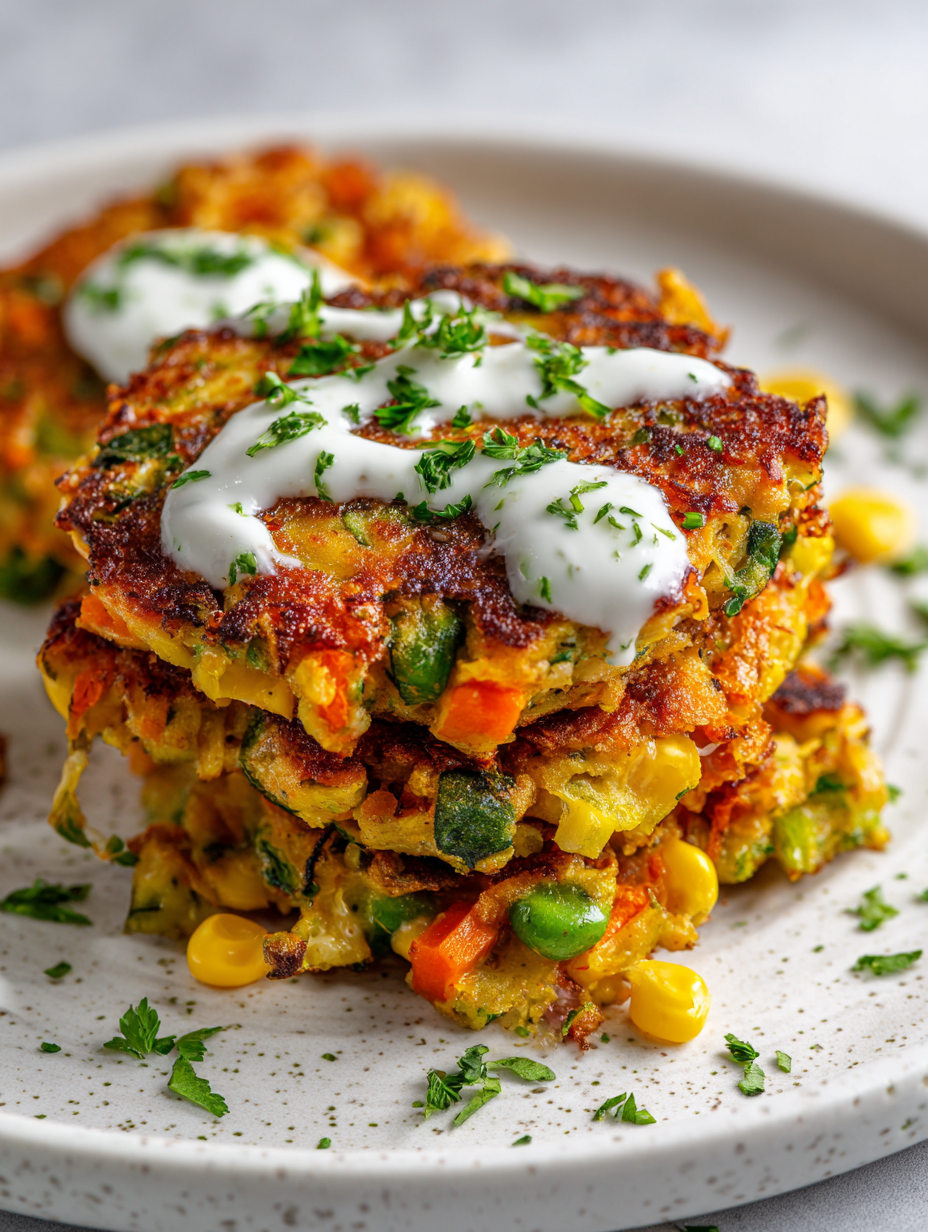
Mixed Vegetable Fritters
Ingredients
Equipment
Method
- Start by finely chopping or grating your leftover vegetables, ensuring they are small and uniform for even cooking. Drain any excess moisture, especially from watery vegetables like zucchini.
- In a large mixing bowl, combine the vegetables with flour, eggs, minced garlic, chopped onion, cumin, and a pinch of salt and pepper. Mix everything thoroughly until you have a thick, cohesive batter that holds together but is still scoopable.
- Heat about 2 tablespoons of oil in a skillet over medium heat until shimmering and hot—listen for a gentle crackle when the batter hits the pan.
- Use a spoon or small scoop to drop batter into the hot oil, pressing each fritter slightly with the back of the spoon to flatten and ensure even cooking. Fry in batches, leaving space between each fritter.
- Fry the fritters for about 3-4 minutes on each side, until they turn a deep golden brown and develop a crispy crust. Flip carefully with a spatula or slotted spoon.
- Once golden, remove the fritters with a slotted spoon and drain on paper towels to remove excess oil. Repeat with remaining batter.
- Let the fritters sit for a couple of minutes to firm up, then serve while still warm. Garnish with herbs or a squeeze of lemon if desired.
Top tips for perfect fritters
- Proper moisture squeeze: Always drain excess water from grated zucchini; it keeps fritters crispy and prevents sogginess.
- Oil temperature check: Shimmering oil is key—if it crackles when batter hits, you’re at the right heat (~180°C/350°F).
- Batter consistency: Aim for a thick, scoopable batter that holds together but isn’t stiff—adjust with a splash of water if needed.
- Gentle pressing: Flatten each fritter slightly in the pan to ensure even cooking and crispy edges, but avoid pressing too hard.
- Color cues: Fry until golden brown on both sides—watch for a crackly crust and a fragrant, savory aroma.
- Rest briefly: Let cooked fritters rest for 2-3 minutes before serving—this helps set the crust and keeps them crispy.
- Avoid overcrowding: Fry in small batches to maintain oil temperature and crispness—crowding causes sogginess and uneven browning.
Common mistakes and how to fix them
- TOO DRY: Forgot to squeeze excess moisture from zucchini; leads to soggy fritters. Fix with thorough squeezing.
- TOO GREASY: Dumped too much oil in pan; results in greasy bites. Use moderate oil, about 1/4 inch deep.
- BURNED: Over-torched the fritters; leaves bitter flavor. Adjust heat and cook in batches for even crispness.
- UNDERCOOKED: Left fritters too soft inside; check for golden crust and firm center before flipping.
Quick kitchen fixes
- If batter is too thick, splash in water and stir gently.
- When fritters are greasy, drain on paper towels immediately.
- Splash a little lemon juice to brighten dull flavors.
- Patch a crackly crust by turning up heat briefly—then lower for even cooking.
- Shield burnt edges with a quick sprinkle of fresh herbs or a squeeze of lemon.
Prep, store, and reheat tips
- You can prepare the vegetable mixture a day ahead; keep it covered in the fridge to retain freshness and prevent drying out. The flavors will meld slightly overnight.
- Cooked fritters are best enjoyed fresh, but you can store leftovers in an airtight container in the fridge for up to 2 days. Reheat in a hot skillet until crispy and warm, about 2-3 minutes per side, with a faint crackle and aroma of fried batter.
- Uncooked batter can be refrigerated for up to 24 hours, but expect a slight change in texture; give it a quick stir before frying to reincorporate ingredients.
- When reheating, avoid microwaving, which makes the fritters soggy. Instead, reheat in the oven at 180°C / 350°F for about 10 minutes, until they shimmer with warmth and crispy edges.
- For freezing, shape the uncooked fritters on a tray, freeze until solid, then transfer to a zip-top bag. Fry directly from frozen, adding an extra minute or two, until golden and crackly, with a smoky hint of oil.
Top questions about fritters
1. Can I use raw vegetables instead of cooked ones?
Use leftover cooked vegetables, then squeeze out excess moisture to keep the fritters crispy. The texture depends on how well you drain them.
2. Should I cook the vegetables before mixing?
Yes, but raw vegetables release more water, so squeeze them well and consider adding a little extra flour to bind.
3. How do I know when the fritters are done?
Aim for a golden-brown crust with a slight crackle when you flip. The inside should be tender but not raw.
4. What’s the ideal oil temperature?
Fry in about 1/4 inch of hot oil, around 180°C (350°F). The oil should shimmer and crackle when batter hits.
5. How do I fix batter that’s too thick or thin?
If the batter feels too thick, stir in a splash of cold water. If too runny, add a little more flour.
6. How do I remove excess oil?
Use a slotted spoon to drain excess oil after frying. Rest the fritters on paper towels to keep them crispy.
7. Can I reheat leftovers?
Fritters are best eaten immediately for maximum crispness. Reheat in a hot skillet for 2-3 minutes until crisp again.
8. How do I store and reheat?
Yes, freeze unshaped batter or cooked fritters. Reheat directly from frozen in a hot pan for best texture.
9. Can I customize the seasonings?
Adjust seasonings based on your vegetables. A pinch of cumin or fresh herbs can boost flavor.
10. What oil is best for frying?
Use a neutral oil like canola or sunflower for frying. It won’t interfere with the natural vegetable flavors.
These vegetable fritters are more than just a snack—they’re a reminder that simple ingredients can be turned into something special with a little heat and care. When the kitchen fills with that smoky, savory aroma, I know I’ve nailed the crispy exterior and tender inside. It’s a humble dish, but it carries a little bit of everyday magic.
In times when quick comfort is needed or leftovers need rescuing, these fritters come through. They’re versatile, forgiving, and always satisfying—perfect for turning what you have into a warm, crispy bite that makes any day feel just a bit brighter.

Welcome to Exploreing New Tastes. I’m really glad you found your way here. I’m a food blogger driven by curiosity more than perfection. I think about flavors constantly, how they change across cultures, how a small tweak can completely shift a dish, and how food tells stories long before anyone sits down to eat. This blog is where I document that curiosity, one recipe and one experience at a time.