
Turning humble vegetables into crispy, snackable chips is my little kitchen rebellion. It’s about finding joy in the simplest ingredients, giving them a new, playful life that surprises even myself. Plus, these baked chips are way healthier than their fried cousins, so I don’t have to feel guilty biting into a handful.
There’s something satisfying about slicing vegetables thin, watching them crisp up in the oven, and realizing I’ve created something irresistible from leftovers or odds and ends. It’s a bit chaotic—some slices are thicker, some burn—but that’s part of the charm. It’s a snack that feels honest, imperfect, and totally worth the effort.
Focusing on the art of transforming humble, often overlooked vegetables into crispy, addictive snacks that defy expectations and bring a sense of playful resourcefulness to the kitchen.
The story behind this recipe
- This recipe came from a lazy afternoon experiment, trying to turn odds and ends into something snackable. I was tired of tossing leftover vegetables, so I sliced them thin and popped them in the oven. Watching them crisp up was oddly satisfying, a little victory in my own kitchen chaos.
- It dawned on me that these chips aren’t about perfection, but about embracing the imperfect. Slices vary in thickness, some burn, some stay soft, but they all remind me that good snacks don’t have to be fancy or precise. It’s just honest, crunchy, and a bit rebellious.
Ingredient breakdown: key components
- Sweet potatoes: I love their natural sweetness and vibrant orange color, which turns crispy and caramelized in the oven—try a different variety if you want a milder or earthier flavor.
- Zucchini: Their high water content makes them tricky, so I slice them thin and pat dry thoroughly—skip this step if you prefer a softer chip with a bit more bite.
- Carrots: Their earthy sweetness adds a nice contrast, but I recommend slicing them very thin to prevent burning—try parsnips for a similar flavor but slightly sweeter crunch.
- Beets: I find their deep, smoky flavor intensifies as they bake—use gloves to handle their vivid color, or they’ll stain everything. For a milder taste, mix with lighter root vegetables.
- Olive oil: I prefer a good extra virgin for a fruity aroma, but a neutral oil like canola works just fine—just don’t skip it, or they won’t crisp up evenly.
- Salt & spices: A sprinkle of sea salt is classic, but I love adding smoked paprika or garlic powder for an extra flavor punch—go light on delicate veggies to avoid overpowering their natural flavor.
- Herbs (optional): Fresh thyme or rosemary can add a fragrant touch—sprinkle just before baking to prevent burning and keep their aroma fresh.
Spotlight on key ingredients
Sweet potatoes:
- I love their natural sweetness and vibrant orange color, which turns crispy and caramelized in the oven—try a different variety if you want a milder or earthier flavor.
- Zucchini: Their high water content makes them tricky, so I slice them thin and pat dry thoroughly—skip this step if you prefer a softer chip with a bit more bite.
Olive oil and spices:
- Olive oil: I prefer a good extra virgin for a fruity aroma, but a neutral oil like canola works just fine—just don’t skip it, or they won’t crisp up evenly.
- Salt & spices: A sprinkle of sea salt is classic, but I love adding smoked paprika or garlic powder for an extra flavor punch—go light on delicate veggies to avoid overpowering their natural flavor.
Notes for ingredient swaps
- Dairy-Free: Skip butter or cheese; use olive oil or coconut oil for a richer, nutty flavor.
- Vegan: Omit honey or dairy-based seasonings; opt for maple syrup or tamari for depth.
- Low-Sodium: Reduce salt; enhance flavor with herbs or smoked paprika instead.
- Spice Variations: Use chili powder or cumin instead of paprika for a smoky, fiery kick.
- Nut-Free: Avoid nut oils; stick with vegetable or sunflower oil for a neutral, crispy finish.
- Sweet Vegetables: Swap sweet potatoes with carrots or parsnips for different earthy sweetness.
- Herb Boost: Add fresh thyme or rosemary before baking for fragrant, herbal notes.
Equipment & Tools
- Oven: To bake the vegetable slices evenly.
- Parchment paper or silicone baking mat: Prevent sticking and facilitate easy cleanup.
- Mandoline or sharp knife: Slice vegetables uniformly thin for even baking.
- Large mixing bowl: Toss slices with oil and spices evenly.
- Spatula or tongs: Arrange slices on the baking sheet and flip if needed.
- Wire rack: Allow chips to cool and crisp further after baking.
Step-by-step guide to baked vegetable chips
- Preheat your oven to 180°C (350°F). Line a baking sheet with parchment paper or a silicone mat. Gather your vegetables and a sharp mandoline or knife for slicing thinly and evenly.
- Wash and dry your chosen vegetables thoroughly. Slice them as thin as possible—about 1-2 mm—using the mandoline for consistency. Thinner slices crisp better, thicker slices stay soft or burn.
- In a large bowl, toss the vegetable slices with about 1-2 teaspoons of olive oil per cup of sliced veggies. Ensure each piece is lightly coated but not greasy. Add a pinch of sea salt and your preferred spices. Mix well.
- Arrange the slices in a single layer on the prepared baking sheet. Spread them out so they don’t overlap. Bake in the middle rack for 15-20 minutes. Check often after 12 minutes to prevent burning.
- a. For even crispiness, flip or rotate the sheets halfway through baking. b. Keep an eye on the edges—they tend to brown faster. c. If some slices are browning too quickly, remove them early and set aside.
- The chips are done when they are golden, crisp, and slightly blistered. They should crackle when you bend a piece. If they’re soft or bend easily, give them a few more minutes, but watch closely to avoid burning.
- Remove from oven and let the chips rest on the baking sheet for 5 minutes. They will continue to crisp as they cool. Transfer to a wire rack if you want them extra crispy. Serve once cooled for maximum crunch.
Let the chips rest on the baking sheet for 5 minutes, then transfer to a wire rack if crispness needs boosting. Serve at room temperature, enjoy the crunch and the faint roasted aroma.
How to Know It’s Done
- Edges are golden and blistered, chips crackle when bent.
- Slices are uniformly crispy, with no soft or soggy spots.
- A light aromatic smell of baked vegetables and spices fills the kitchen.
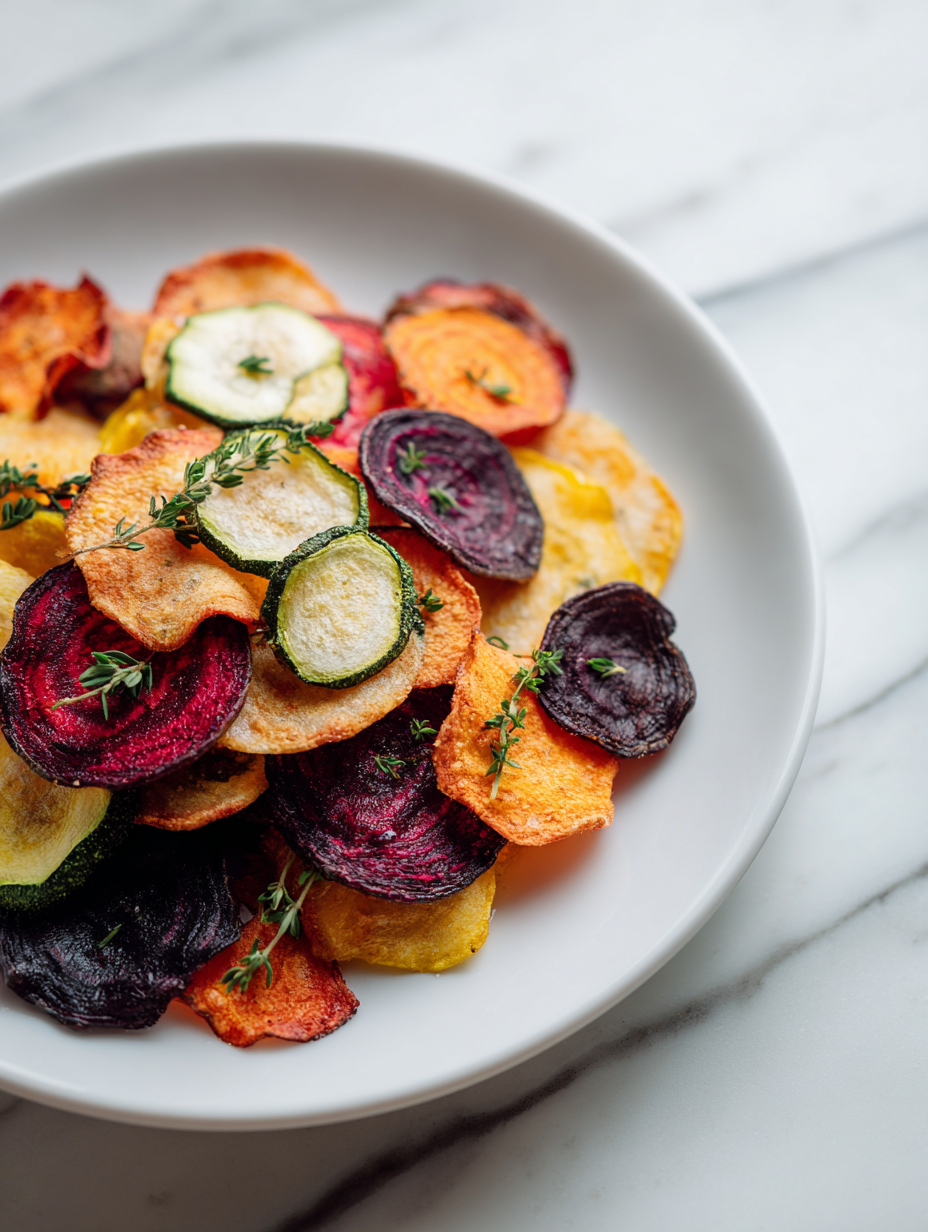
Baked Vegetable Chips
Ingredients
Equipment
Method
- Preheat the oven to 180°C (350°F) and line a baking sheet with parchment paper or a silicone mat.
- Wash and peel the vegetables if desired; then, using a mandoline or sharp knife, slice them as thinly and evenly as possible—about 1-2 mm thick. Thinner slices will crisp up better in the oven.
- Place the vegetable slices in a large bowl, drizzle with olive oil, and toss gently to coat each piece lightly and evenly. This helps them crisp up and prevents sticking.
- Add a pinch of sea salt and smoked paprika to the bowl, then toss again so the spices are distributed evenly across all slices.
- Arrange the slices in a single layer on the prepared baking sheet, making sure they don’t overlap too much. Space is key for even crisping.
- Bake in the middle rack for 15-20 minutes, checking after 12 minutes. Keep an eye on the edges—they can brown quickly—so rotate the sheet if needed to promote even baking.
- Once the chips are golden, blistered, and crisp to the touch, remove the baking sheet from the oven and let the chips rest for about 5 minutes. They will continue to crisp as they cool.
- Transfer the chips to a wire rack if you want them extra crispy, or serve directly from the baking sheet. Enjoy them at room temperature for the best crunch and flavor.
Pro tips for perfect vegetable chips
- Thin slices: Use a mandoline for consistent, crisping slices that bake evenly and crackle beautifully.
- Even coating: Toss vegetable slices thoroughly with oil and spices to prevent sticking and ensure uniform crunch.
- Monitor closely: Check chips around 12 minutes; edges brown fast, and over-baking turns them bitter and brittle.
- Flip or rotate: Turn slices halfway through baking for even color and crispness across all pieces.
- Cooling is key: Rest chips on the baking sheet for 5 minutes to enhance crunch or transfer to a wire rack.
- Avoid overlap: Space slices well on the baking sheet to prevent soggy spots and promote even drying.
- Adjust thickness: If chips are too soft, thin slices more; thicker slices need longer baking but risk uneven crisping.
Common mistakes and how to fix them
- FORGOT to pat dry zucchini slices → causes sogginess, pat thoroughly before baking.
- DUMPED oil without tossing evenly → uneven crispiness, toss slices well with oil.
- OVER-TORCHED edges → burn quickly, check at 12 minutes, rotate sheets.
- MISSED resting time → chips stay soft, cool on rack for maximum crunch.
Quick fixes and pantry swaps
- When slices are uneven, adjust thickness or slice in smaller batches for consistent crispness.
- If chips are soggy, return to oven at 150°C (300°F) for 5 minutes to re-crisp.
- Splash a little lemon juice when mixing veggies to brighten flavors and prevent browning.
- Patch burnt edges quickly by removing them immediately—serve the rest for a less bitter crunch.
- Shield delicate slices with parchment if they start to brown too fast, especially near the edges.
Prep, store, and reheat tips
- You can slice vegetables a day ahead; keep them in an airtight container in the fridge to prevent moisture loss, which helps maintain crispness.
- Store baked chips in an airtight container at room temperature for up to 2 days; they’ll stay crunchy but may lose some freshness, so enjoy sooner rather than later.
- Reheating isn’t necessary; for a fresh crunch, briefly warm chips in a 150°C (300°F) oven for 3-5 minutes, watching for that crackling sound.
- Avoid storing chips in humid or damp environments; moisture will make them soft and dull their crunch, so keep them in a cool, dry place.
Top questions about baked vegetable chips
1. How thin should the vegetables be sliced?
Use a sharp mandoline or very steady hand with a knife to get thin, uniform slices. Thinner slices crisp better and faster.
2. What temperature and time are best for baking?
Bake at 180°C (350°F) for 15-20 minutes. Check frequently after 12 minutes to prevent burning and achieve the perfect crunchy texture.
3. Why are my chips soft instead of crispy?
If chips are soggy, return them to the oven at 150°C (300°F) for a few minutes. They will re-crisp and crackle when properly reheated.
4. How should I store and reheat leftover chips?
Store in an airtight container at room temperature up to 2 days. For best crunch, reheat in a 150°C (300°F) oven for 3-5 minutes.
5. Can I use a different oil than olive oil?
Use a high-quality extra virgin olive oil for flavor and crispness. Neutral oils like canola also work but may lack the fruity aroma.
6. Can I substitute other vegetables?
Yes, you can swap sweet potatoes for carrots, parsnips, or beets. Each brings a unique flavor and color, so choose based on your taste preference.
7. Should I dry the vegetables before baking?
Pat dry vegetables thoroughly after washing to remove excess moisture. This prevents sogginess and helps them crisp up better in the oven.
8. When should I add herbs and spices?
Add herbs like thyme or rosemary just before baking to keep their aroma fresh and prevent burning during roasting.
9. What’s the best way to prepare the baking sheet?
Use parchment paper or a silicone baking mat to prevent sticking and ensure easy cleanup. It also helps the chips crisp evenly.
10. How do I know when the chips are done?
Keep an eye on the chips after 12 minutes. Edges should be golden and blistered, and they should crackle when bent for perfect crunch.
These baked vegetable chips remind me that simplicity in the kitchen often leads to the most satisfying bites. They’re perfect for when I need a crunchy, honest snack that doesn’t ask for much fuss but delivers a lot of flavor.
In a world full of overly processed snacks, this humble, crispy treat feels grounding—like a small act of rebellion against convenience. Plus, they’re so easy to customize, I find myself always experimenting, which keeps snack time interesting.

Welcome to Exploreing New Tastes. I’m really glad you found your way here. I’m a food blogger driven by curiosity more than perfection. I think about flavors constantly, how they change across cultures, how a small tweak can completely shift a dish, and how food tells stories long before anyone sits down to eat. This blog is where I document that curiosity, one recipe and one experience at a time.