
Falafel often gets a reputation for being just a quick street-food snack, but honestly, it’s the seasoning and texture that make or break it for me. It’s not just about grinding chickpeas and frying; it’s about that gentle balance of spices and that perfect crunch on the outside while staying tender inside.
I’ve played around with a few recipes, and what really changes the game is how you season the mixture and how you fry it. A pinch of cumin, some fresh herbs, and a dash of cayenne—those little touches lift the falafel from dull to memorable. And getting that crisp exterior without overdoing it is an art I’m still fine-tuning.
This recipe is more than just a method—it’s a reminder that simple ingredients, when seasoned thoughtfully, can turn into something extraordinary. It’s about savoring each bite, feeling that crunch, and catching the warm, aromatic spice notes that linger just right on your tongue. That’s what makes falafel worth the effort.
Focusing on the overlooked importance of seasoning and texture in falafel, revealing how a pinch of spice and the right crispness elevate the humble chickpea ball from simple snack to memorable bite.
Seasoning and crunch mastery
- Making falafel at home reconnects me with my childhood street food memories, the aroma of frying spices filling the air.
- There’s a quiet pride in perfecting that golden, crispy exterior while keeping the inside tender and flavorful.
- I love experimenting with herbs and spices, discovering new combinations that make each batch uniquely mine.
- Nothing beats the satisfaction of crafting a vegetarian dish that’s both hearty and crave-worthy, especially when shared with friends.
- Frying falafel is messy, chaotic, but totally worth it when I hear that satisfying crackle and see the perfect brown glow.
The story behind this recipe
- Making falafel at home started as a way to reclaim a street food memory that felt too good to only enjoy outside. I remember the first time I tried to make it myself—messy, loud, but oddly satisfying when that first crispy bite hit my mouth. It’s become a little ritual, a way to slow down and really appreciate simple ingredients.
- What keeps me coming back is that moment of tweaking spices—more cumin, less coriander—and trying to get that perfect crunch without burning the edges. It’s a balancing act, but one that feels pretty rewarding when I nail it after a few tries. It’s funny how a humble chickpea ball can turn into a conversation starter or a comforting snack.
- heading: ‘The story behind this recipe’
Falafel’s Surprising Past
- Falafel’s roots trace back over a thousand years to medieval Egypt, where it was initially a street food for Coptic Christians avoiding meat during Lent.
- Some historians believe falafel was originally made with fava beans before chickpeas became the popular legume in the Middle East, offering a different texture and flavor.
- In Middle Eastern culture, falafel is more than food; it’s a communal act, often shared from large platters, symbolizing hospitality and togetherness.
Ingredient breakdown: key components
- Chickpeas: I prefer dried, soaked overnight; they give a better texture and nutty flavor. Skip canned if you can, for that fresh bite.
- Fresh herbs: Parsley and cilantro bring vibrancy, but if you’re out, dried herbs add a subtle background aroma. Just use less.
- Onion: Finely chopped for a punch of sweetness and moisture. If you want a milder flavor, soak the chopped onion in water for a few minutes first.
- Garlic: A clove or two, smashed and minced. It’s the bold note that wakes up the whole falafel. Too much can get overpowering, so go easy.
- Spices: Cumin, coriander, cayenne—these deepen the flavor and add warmth. Toast them lightly before grinding for a smoky, aromatic punch.
- Binding agent: Baking soda helps the falafel puff up, but if you want denser bites, skip it. A little flour can help hold everything together.
- Oil: For frying, I use a neutral oil with a high smoke point—vegetable or sunflower. The sizzle and aroma tell me it’s ready to go.
Spotlight on key ingredients
Chickpeas:
- I prefer dried, soaked overnight; they give a better texture and nutty flavor. Skip canned if you can, for that fresh bite.
- Fresh herbs: Parsley and cilantro bring vibrancy, but if you’re out, dried herbs add a subtle background aroma. Just use less.
- Onion: Finely chopped for a punch of sweetness and moisture. If you want a milder flavor, soak the chopped onion in water for a few minutes first.
Spices & Oil:
- Cumin and coriander: Toast lightly before grinding to unlock their aromatic, smoky notes. They’re the backbone of flavor that makes falafel stand out.
- Oil for frying: Neutral oils with high smoke points—vegetable or sunflower—help get that crackly, golden exterior. Watch the temperature closely to avoid burning.
Notes for ingredient swaps
- Dairy-Free: Use tahini or hummus as a dip instead of yogurt-based sauces. The flavor remains rich without dairy, but the creaminess is slightly different.
- Gluten-Free: Replace all-purpose flour with chickpea flour or rice flour. It helps bind the mixture and keeps it gluten-free, though it may alter the texture slightly.
- Fresh Herbs: If fresh parsley or cilantro isn’t available, use dried herbs—reduce the quantity by half to avoid overpowering the mixture.
- Onion: Substitute with shallots or green onions for a milder, sweeter flavor. Finely chop and soak briefly if using green onions to reduce sharpness.
- Spices: Swap cumin for smoked paprika for a smoky twist. Adjust quantities to taste, as the flavor profile shifts distinctly.
- Oil: Use light olive oil or avocado oil for frying. They have a neutral flavor and high smoke point, but can add subtle different notes to the final fry.
- Legumes: If chickpeas aren’t available, fava beans are traditional but can be tricky to find and prepare. Otherwise, try lentils—soak and cook thoroughly before blending.
Equipment & Tools
- Food processor: Quickly blend chickpeas and herbs into a coarse mixture.
- Deep skillet or pot: Hold enough oil for frying at consistent temperature.
- Slotted spoon: Gently lift and move falafel in hot oil.
- Baking sheet with paper towels: Drain excess oil and rest falafel.
- Thermometer: Monitor oil temperature for perfect frying.
Step-by-step guide to falafel
- Equipment & Tools: Use a food processor for quick, even blending. A small bowl for soaking. A deep skillet or pot for frying, filled with about 5cm of oil heated to 180°C (356°F). A slotted spoon for handling falafel, and a baking sheet lined with paper towels for draining.
- Soak chickpeas: Rinse dried chickpeas, then cover with plenty of cold water. Soak overnight (at least 12 hours). Drain well before use.
- Prepare herbs & aromatics: Finely chop parsley, cilantro, and onion. Mince garlic. Keep everything ready to blend.
- Blend ingredients: In a food processor, pulse chickpeas, herbs, onion, garlic, spices, and a pinch of salt until mixture is coarse but holds together when pressed. If too crumbly, add a tablespoon of water; if too wet, add a little flour.
- Form falafel balls: Scoop about 1-2 tablespoons of mixture and roll into balls or patties, about 2.5cm (1 inch) diameter. Place on the prepared baking sheet.
- Fry the falafel: When oil reaches 180°C (356°F), gently lower a few balls into the hot oil. Fry in batches, turning occasionally. Cook for 3-4 minutes until golden brown and crispy.
- a. Check for doneness: They should be deep golden, with a crackly exterior and a tender interior.
- b. Avoid overcrowding: Fry in small batches to maintain oil temperature and crispness.
- c. Fix for uneven browning: Adjust heat if the falafel browns too quickly or slowly.
- Drain & rest: Remove falafel with a slotted spoon, drain on paper towels. Rest for 2 minutes to firm up.
- Serve hot: Pair with tahini sauce, pita, or fresh salad.
Let the fried falafel rest briefly on paper towels. Serve immediately while hot and crispy, paired with your favorite dips or in pita pockets. Garnish with additional herbs if desired.
How to Know It’s Done
- Color: Deep golden brown exterior with a crackly crust.
- Texture: Outside crispy, inside tender but not mushy.
- Appearance: Uniform size and shape, no raw spots.
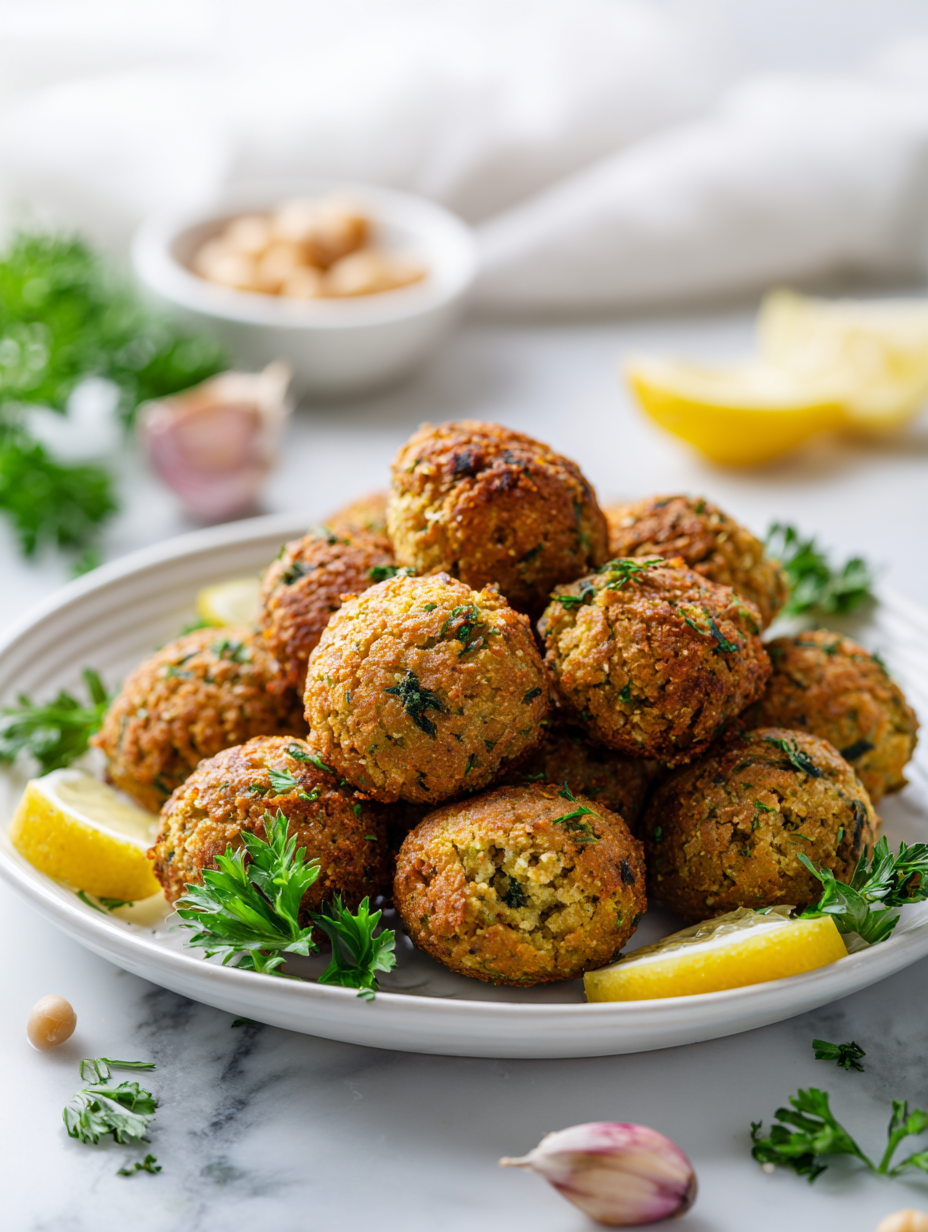
Homemade Falafel
Ingredients
Equipment
Method
- Place dried chickpeas in a large bowl and cover with cold water. Soak overnight, then drain thoroughly. The chickpeas should be plump and firm.
- In a dry skillet, toast cumin and coriander over medium heat until fragrant, about 1 minute. Let cool, then grind to a powder using a mortar and pestle or spice grinder.
- In a food processor, combine soaked chickpeas, chopped parsley, cilantro, onion, minced garlic, toasted spices, cayenne, and a pinch of salt. Pulse until mixture becomes coarse and slightly sticky, but not pureed. Scrape down sides as needed.
- Add baking soda and flour to the mixture, then pulse briefly to incorporate. The mixture should hold together when pressed; if too crumbly, add a teaspoon of water.
- Transfer the mixture to a bowl and let it rest in the fridge for about 30 minutes. This helps it relax and makes shaping easier.
- Using a tablespoon or your hands, shape the mixture into small balls or patties, about 2.5cm in diameter. Place them on a tray lined with parchment.
- Heat oil in a deep skillet over medium-high heat until it reaches about 180°C (356°F). You can test with a small piece of mixture—if it sizzles and bubbles immediately, the oil is ready.
- Gently lower a few falafel balls into the hot oil, being careful not to overcrowd the pan. Fry until golden brown and crispy, about 3-4 minutes, turning as needed for even cooking.
- Remove the fried falafel with a slotted spoon and drain on paper towels. Repeat with remaining balls, maintaining oil temperature.
- Serve the crispy falafel warm with your favorite dipping sauces or in pita bread with fresh vegetables. Enjoy the vibrant flavors and satisfying crunch!
Notes
Pro tips for perfect falafel
- Use cold water: Soaking chickpeas in cold water overnight prevents them from becoming too soft during blending.
- Chill the mixture: Resting the falafel mixture for 30 minutes in the fridge helps it firm up, making shaping easier.
- Fry in batches: Avoid overcrowding the pan to keep oil temperature steady and ensure crispiness.
- Test oil temperature: Use a thermometer; 180°C (356°F) is ideal for crispy, golden falafel.
- Adjust seasoning: Taste the raw mixture before frying; it might need more salt, herbs, or spices for full flavor.
- Control frying heat: Keep oil at a steady 180°C (356°F) to prevent burning or undercooking.
- Drain well: Let fried falafel rest on paper towels to remove excess oil and stay crispy when served.
Common mistakes and how to fix them
- FORGOT to dry chickpeas, resulting in greasy falafel. FIX with thorough drying before blending.
- DUMPED too much oil, causing soggy falafel. FIX by frying in proper temperature oil.
- OVER-TORCHED the falafel, making them bitter. FIX by adjusting heat and watching closely.
- MISSED seasoning balance, resulting in bland bites. FIX by tasting mixture before frying.
Quick fixes and pantry swaps
- When falafel is greasy, splash a little lemon juice to brighten flavors and cut through oil.
- If mixture feels too wet, patch with a spoonful of flour or breadcrumbs to firm it up quickly.
- When oil shimmers and crackles loudly, it’s ready—never fry in dull, smoke-filled oil.
- Splash cold water on over-browned falafel to cool and prevent burning—then continue frying carefully.
- When falafel lacks crunch, swap out regular oil for a high smoke point oil like sunflower for better crisping.
Prep, store, and reheat tips
- Prepare the falafel mixture up to 24 hours in advance; keep it covered in the fridge. The flavors meld and it firms up for easier shaping.
- Falafel balls can be shaped and refrigerated for up to 2 days before frying. Keep them covered to prevent drying out.
- Cooked falafel stays crisp for about 1 hour at room temperature; for longer storage, refrigerate in an airtight container for up to 3 days.
- Reheat falafel in a 180°C (356°F) oven for 8-10 minutes until warmed through and crispy again. Avoid microwaving to preserve crunch.
- Freezing cooked or uncooked falafel is fine—store in a sealed container for up to 1 month. Reheat directly from frozen, adding a few extra minutes.
Top questions about falafel
1. Can I use canned chickpeas?
Soaking dried chickpeas overnight is best; canned chickpeas tend to be too soft and lead to greasy falafel. Rinse and dry thoroughly before using.
2. Can I use canned chickpeas instead of dried?
Yes, but canned chickpeas are softer and more watery, which can make shaping tricky and result in less crispy falafel. Drain well and pat dry before mixing.
3. How do I know when falafel is cooked?
Falafel should be golden brown and crispy on the outside, with a tender interior. It shouldn’t be greasy or raw in the middle when tested with a skewer or thermometer.
4. How hot should the oil be?
Adjust the heat to keep the oil at around 180°C (356°F). If the falafel browns too fast, lower the heat; if it’s not browning, increase it slightly.
5. How many falafel can I fry at once?
Fry in small batches to prevent oil temperature drops, which can cause soggy falafel. Keep batches manageable for even crispiness.
6. My falafel mixture is too wet or dry, what do I do?
If the mixture feels too wet and won’t hold shape, add a little flour or breadcrumbs. Too dry? Add a teaspoon of water or a splash of oil.
7. Why are my falafel greasy?
Too greasy? Drain fried falafel on paper towels and check oil temperature. For extra crispiness, fry a little longer until deep golden.
8. Can I omit herbs or use dried herbs?
Use fresh herbs like parsley and cilantro for vibrant flavor and aroma. If using dried, reduce quantity and crush to release more scent.
9. Can I prepare falafel ahead of time?
Store uncooked falafel balls covered in the fridge for up to 2 days. Reheat in a hot oven or air fryer to restore crispness.
10. My falafel falls apart when frying, what’s wrong?
If falafel cracks open during frying, it’s likely too wet or the oil’s too hot. Chill the mixture briefly before frying to help hold shape.
Making falafel at home isn’t just about the final bite; it’s about the process—the smell of spices filling the kitchen, the satisfying crackle of frying, and that moment of pulling out perfectly golden balls. It’s a humble dish that reminds me how simple ingredients can become something special with just a little attention.
In a world full of trendy bites and quick snacks, a good falafel offers a grounding, flavorful pause. It’s messy, unpredictable, and totally worth every crispy, aromatic second. Sometimes, the best meals are those made with care and a little bit of chaos.

Welcome to Exploreing New Tastes. I’m really glad you found your way here. I’m a food blogger driven by curiosity more than perfection. I think about flavors constantly, how they change across cultures, how a small tweak can completely shift a dish, and how food tells stories long before anyone sits down to eat. This blog is where I document that curiosity, one recipe and one experience at a time.